
Folders organized by year next to a passport and mail to help with proving U.S. residency and 10 years continuous presence.

Proving 10 Years of U.S. Residency in 2026: A Senior Attorney’s Guide

Proving 10 Years of U.S. Residency in 2026: A Senior Attorney’s Guide

Folders organized by year next to a passport and mail to help with proving U.S. residency and 10 years continuous presence.

Living in the United States without permanent legal status is a journey of resilience, but it is also a journey filled with legal uncertainty. As we navigate the complexities of 2026, the stakes for our immigrant community have never been higher. Whether you are seeking a cancellation of removal in immigration court or pursuing a specific permit that requires proof of long term presence, the burden of proof rests entirely on your shoulders. At Castan, Lecca & Boeschen, we have spent over 30 years defending the rights of those who have built their lives here, and we know that a single missing receipt or an unexplained gap in your timeline can be the difference between staying with your family and being forced to leave the only home you know.

The legal standard for proving ten years of continuous physical presence is strict. It is not enough to simply tell a judge that you have been here since 2016. You must document your life month by month, year by year. In the current 2026 legal climate, USCIS and the Department of Justice have increased their scrutiny of evidence. They are looking for inconsistencies and “paper trails” that don’t align. This guide is designed to help you organize your history so that when you stand before an officer or a judge, your story is backed by an unbreakable wall of evidence.

The Standard of Continuous Presence in 2026

To qualify for many forms of relief, such as Non-LPR Cancellation of Removal, you must demonstrate that you have been physically present in the U.S. for at least ten years prior to the service of a Notice to Appear. This is governed by the “stop-time rule,” which effectively freezes your clock the moment the government initiates removal proceedings. If you have lived here for nine years and 364 days when you receive that notice, you may be ineligible for relief. This is why immediate legal intervention is critical.

Furthermore, “continuous” means you cannot have left the country for more than 90 days in a single trip or more than 180 days in total over that ten year period. In 2026, with advanced digital border tracking, the government has more tools than ever to verify your entries and exits. If you traveled back to your home country for a family emergency and stayed longer than expected, we need to address that gap strategically with secondary evidence or legal waivers where applicable.

Essential Financial and Employment Records

The strongest evidence of your life in America is your economic footprint. The government expects to see that you have contributed to the economy and maintained a stable residence. Tax returns are the gold standard. We recommend providing IRS tax transcripts rather than just your personal copies of Form 1040. Transcripts prove that the IRS actually received and processed your filing. If you have years where you did not file taxes, it is not too late to rectify that, but you must do so under the guidance of an attorney to avoid self incrimination regarding unauthorized employment.

Employment records are equally vital. In our 30 years of practice, we have found that pay stubs, W-2 forms, and even 1099 records provide a chronological map of your presence. For those who worked in more informal settings, such as domestic work or landscaping, we assist our clients in obtaining notarized letters from employers. These letters must be specific, including the dates of employment, your duties, and the employer’s contact information. In 2026, a generic letter saying “he worked for me for a long time” will likely be rejected for lack of foundation.

Housing and Utility Documentation

Lease agreements and utility bills used as USCIS residency documents and cancellation of removal evidence for immigration cases.

Your address history is a primary metric used by immigration officials. We advise all our clients to keep a dedicated “residency folder” containing every lease agreement they have signed over the last decade. If you lived with family members or friends and were not on the formal lease, we can use secondary evidence. This includes utility bills in your name, such as water, electricity, gas, or even internet service.

Even if you moved frequently, each address needs a corresponding piece of evidence. Bank statements are excellent for this purpose. A bank statement shows the date, your name, and your U.S. address. It also shows transactions made at local businesses, which further proves you were physically present in your community during those months. In an era where digital banking is the norm, downloading and printing these statements from 2016 through 2026 is one of the first tasks we assign to our clients.

Education and Healthcare Evidence

For families with children, school records are among the most persuasive documents available. If your children have attended school in the U.S. for the last ten years, their transcripts and enrollment letters serve as powerful circumstantial evidence of your own presence. It is highly unlikely that a parent would live in another country while their minor children are enrolled in a U.S. elementary school.

Medical records are another pillar of a strong case. This includes your own records and those of your family. Hospitalization records, immunization cards for children, and dental visit summaries provide clear, dated proof of presence. In 2026, medical privacy laws are strict, but as your legal representatives, we help you navigate the process of obtaining these records through proper HIPAA authorizations.

The 2026 Reality: Delays and Test Changes

If your residency goal is naturalization, you must be aware of the significant changes implemented recently. As of 2026, the Naturalization Civics Test has become more rigorous. Most applicants are now required to answer up to 20 questions instead of 10, needing 12 correct answers to pass. The item bank has expanded to 128 questions, covering more complex topics on federalism and the Constitution.

Processing times remain a challenge. As of February 2026, the median processing time for an I-485 Adjustment of Status is approximately 9 to 11 months, depending on the field office. However, we have seen cases take significantly longer due to backlogs. This is why we emphasize “front loading” your application. By submitting a perfect, document-heavy package at the start, you reduce the likelihood of a Request for Evidence (RFE), which can add six months or more to your wait time.

The Intersection of Injury and Immigration

Many of our clients come to us after a workplace injury or a car accident. This is where the unique expertise of Castan, Lecca & Boeschen becomes your greatest advantage. If you were injured on the job in Georgia, you have the same right to workers’ compensation as any other worker, regardless of your immigration status. However, an injury case can impact your immigration case.

For example, if you receive a workers’ compensation settlement, those funds can be used to prove you will not become a “public charge” in the future. Conversely, if an injury prevents you from working, we must document your medical treatment as proof that you are still present and contributing to your community in other ways. We often coordinate between our personal injury and immigration teams to ensure that a medical malpractice claim or a car accident lawsuit supports your long term goal of staying in the United States.

Why You Cannot Afford to Wait

A woman reviewing legal paperwork before consulting an immigration lawyer in Atlanta from the firm Castan Lecca & Boeschen.

In Georgia, legal deadlines are unforgiving. If you are injured in a car accident, you generally have only two years from the date of the wreck to file a lawsuit. If you are injured at work, you must notify your employer within 30 days. Missing these deadlines can cost you the financial recovery you need to support your family.

The same urgency applies to immigration. Laws and fees change rapidly. For instance, premium processing fees increased again on March 1, 2026, to reflect inflation. Waiting to file your residency application might not only mean higher costs but also the risk of new, more restrictive policies being enacted.

When you work with us, you are not just hiring a lawyer; you are joining a family that has served the Atlanta area for nearly thirty years. We offer free consultations at our Atlanta and Norcross locations and provide full services in Spanish to ensure you understand every step of the process. Do not let your ten years of hard work be erased by a lack of documentation. Call Castan, Lecca & Boeschen at 678-825-3611 today. We are here to help you move forward.

Sources and Verification

Part A: Internal Sources

Part B: Recent External Research

Department of State: Visa Bulletin and Backlogs: https://travel.state.gov/content/travel/en/legal/visa-law0/visa-bulletin.html

Winning Your Workers’ Comp Claim in 2026: The Strategic Legal Guide

Winning Your Workers' Comp Claim in 2026: The Strategic Legal Guide

The attorneys at Castan, Lecca & Boeschen ready to help you secure a successful workers comp claim in Georgia.

When you are injured on the job, your entire world shifts in an instant. The physical pain is often immediately followed by a crushing wave of financial anxiety. How will the mortgage be paid? Who will cover the specialized physical therapy needed for a full recovery? In the Georgia of 2026, the workers’ compensation system has become an increasingly complex bureaucratic machine, designed more for the efficiency of insurance carriers than for the well being of the injured employee. At Castan, Lecca & Boeschen, we have spent over 30 years witnessing how insurance companies attempt to minimize, delay, and deny valid claims. Our mission is to ensure that you are not just another claim number, but a human being whose rights are protected with the full force of the law.

The landscape of 2026 has introduced new challenges, from the integration of AI-driven surveillance by insurance adjusters to stricter interpretations of what constitutes a “work related” injury. To win your claim in this environment, you cannot rely on the goodwill of your employer or the “helpful” advice of a claims adjuster. You need a proactive, aggressive legal strategy that starts the moment the injury occurs. This article provides a deep dive into the essential components of a successful workers’ compensation claim in Georgia, reflecting the most current legal standards and practical realities we face today.

The Immediate Aftermath: The 30 Day Rule and Beyond

In Georgia, the clock starts ticking the second you are injured. Under current 2026 statutes, you are required to report your injury to your employer within 30 days. While this sounds straightforward, it is one of the most common areas where claims are lost before they even begin. Many workers hesitate to report a “minor” strain or a “small” fall, fearing retaliation or believing the pain will simply go away. By the time the pain becomes unbearable six weeks later, the 30 day window has closed, and the insurance company has a rock solid legal defense to deny your claim entirely.

Reporting the injury should always be done in writing. In our practice, we have seen countless instances where an oral report to a supervisor was later “forgotten” or denied under oath. Send a text, an email, or a formal letter, and keep a copy for yourself. This documentation is your first line of defense. Furthermore, be specific about what happened. If you felt a “pop” in your lower back while lifting a crate, say exactly that. Vague descriptions like “my back hurts” allow the insurance company to argue that your pain is a result of a pre existing condition or an injury that happened at home.

Navigating the Panel of Physicians

One of the most restrictive aspects of Georgia workers’ compensation law is the “Panel of Physicians.” Your employer is required to post a list of at least six qualified doctors from which you must choose your primary treating physician. In 2026, insurance companies have become highly sophisticated in selecting doctors for these panels who are “conservative” in their treatment approaches, meaning they are often more focused on getting you back to work quickly than on ensuring your long term health.

If you are unhappy with the doctor you chose from the panel, you have the right to a one time change to another doctor on that same panel without needing permission from the insurance company or a judge. However, choosing the right doctor is a strategic move that should be made with legal counsel. At Castan, Lecca & Boeschen, we maintain an extensive database of the doctors frequently listed on these panels. We know who is fair, who is thorough, and who is essentially a mouthpiece for the insurance industry. Securing a doctor who prioritizes your recovery is the most significant factor in determining the eventual value and success of your claim.

Proving Your Case: Medical Evidence and Surveillance

In 2026, the burden of proof for an injured worker has shifted toward more objective medical data. Insurance companies frequently use “Independent Medical Examinations” (IMEs) to challenge your treating doctor’s findings. These examinations are anything but independent; they are performed by doctors paid by the insurance company to find that you are fully healed or that your injury is not work related. To combat this, we work closely with your treating physicians to ensure that every limitation, every symptom, and every objective finding (like an MRI or EMG) is documented with clinical precision.

Additionally, you must be aware that in 2026, surveillance is constant. Insurance companies now routinely use high resolution drone technology and sophisticated social media monitoring to track injured workers. If you claim a debilitating back injury but post a photo of yourself at a family barbecue standing for two hours, the insurance company will use that against you. We advise our clients to operate under the assumption that they are being watched from the moment they file a claim until the day it is settled. Integrity in your medical appointments and your daily activities is paramount.

The Financial Reality: TTD and PPD Benefits

A successful claim must secure the financial benefits you are entitled to under the law. Temporary Total Disability (TTD) benefits are paid when you are unable to work at all due to your injury. As of the 2026 rate adjustments, these benefits are calculated at two thirds of your average weekly wage, subject to a statutory maximum. It is vital to ensure that your “average weekly wage” is calculated correctly, including any overtime, bonuses, or fringe benefits you received in the 13 weeks prior to the injury. We often find that insurance companies undercalculate this figure, depriving workers of thousands of dollars over the life of a claim.

Once you reach Maximum Medical Improvement (MMI), the point where a doctor believes your condition will not significantly improve with further treatment, you may be eligible for Permanent Partial Disability (PPD) benefits. This is based on a “rating” given by your doctor to a specific body part. For example, a 15% impairment rating to the spine translates into a specific dollar amount under the Georgia schedule. Securing an accurate PPD rating is a battleground in workers’ compensation, and we frequently hire outside medical experts to provide a truly independent assessment if the panel doctor provides a rating that is too low.

The Settlement: Strategy and Timing

A concerned attorney reviewing documents to understand Georgia workers compensation laws 2026 after being injured at work in Atlanta.

Most workers’ compensation cases in Georgia eventually end in a settlement. This is a one time payment where you give up your right to future medical care and weekly benefits in exchange for a lump sum. In 2026, the strategy behind settlements has become more nuanced due to the rising costs of healthcare and the complexities of Medicare Set-Aside (MSA) requirements.

At Castan, Lecca & Boeschen, we do not settle cases prematurely. We wait until your medical future is clear. If you settle before you know if you need surgery, you will be responsible for the cost of that surgery out of your own pocket. We calculate the “full value” of a claim by looking at future medical costs, future lost wages, and the potential for permanent disability. We leverage our 30 years of litigation experience to force the insurance company to pay a settlement that truly reflects the impact the injury has had on your life.

The Intersection of Workers’ Comp and Personal Injury

Often, a workplace injury involves a third party who is not your employer. For example, if you are a delivery driver hit by a negligent motorist, or a construction worker injured by a defective piece of machinery, you may have both a workers’ compensation claim and a personal injury lawsuit. This is where our firm’s dual expertise is invaluable.

While workers’ compensation is a “no fault” system, meaning you don’t have to prove your employer did anything wrong, a personal injury case allows you to recover for pain and suffering, which is not available in workers’ comp. By managing both aspects of your case, we ensure that the workers’ compensation insurance carrier does not take an unfair “lien” or portion of your personal injury settlement, maximizing the total recovery that goes into your pocket.

Why Castan, Lecca & Boeschen?

A workers comp attorney in Norcross discussing workers compensation settlement tactics for an injured client.

The legal system in Georgia is not a level playing field. It is a system built on rules that favor those who know how to navigate them. When you are injured, the insurance company has a team of adjusters and lawyers working to save them money. You deserve a team that is just as experienced, just as aggressive, and far more committed to your future.

We offer free consultations at our offices in Atlanta and Norcross, and we work on a contingency fee basis. This means you pay nothing up front and we only get paid if we win your case. In 2026, you cannot afford to leave your recovery to chance. Whether you are dealing with a catastrophic injury or a repetitive stress claim, our bilingual team is ready to provide the high level representation you need to move forward. Call us today to start your path to a successful claim.

Sources and Verification

Part A: Internal Sources

Part B: Recent External Research

Why Transparency is Your Best Legal Strategy in 2026

Why Transparency is Your Best Legal Strategy in 2026

An accident lawyer at Castan, Lecca & Boeschen ready to protect your attorney-client privilege in Georgia.

When you walk into our office after a traumatic event, we understand that you are likely overwhelmed. Whether it was a catastrophic car wreck on I-85 or a debilitating fall at a construction site, the instinct to protect yourself is natural. Many clients believe that by keeping “unfavorable” details to themselves, they are helping their case. However, as we navigate the legal landscape of 2026, the exact opposite is true. At Castan, Lecca & Boeschen, our 30 years of experience have taught us that a lawyer can handle a “bad” fact, but no lawyer can handle a surprise. In today’s world of digital footprints and AI-driven insurance investigations, hiding information from your accident lawyer is the fastest way to turn a winning case into a total loss.

The year 2026 has introduced a new level of scrutiny in personal injury litigation. Insurance companies are now utilizing advanced automated decision-making technologies (ADMT) and AI surveillance to comb through every aspect of a claimant’s life. They are looking for inconsistencies between what you told your doctor and what your social media or vehicle data reveals. To secure the superior results we are known for, we must be armed with the absolute truth. This article explains why total transparency with your legal team is not just a suggestion, but a necessity for your success.

The Shield of Attorney-Client Privilege

The most important thing to understand is that your conversations with us are protected by attorney-client privilege. Under Georgia law (O.C.G.A. § 24-9-24), what you tell your attorney or their staff is strictly confidential. This privilege exists specifically so that you can be completely honest without fear that your words will be used against you in court.

We are on your side. When you share a difficult detail with us—perhaps you were distracted for a second before the crash, or you have a criminal record from ten years ago—we can build a strategy to address it. We can find ways to mitigate the impact of that information. But if we find out about it for the first time during a deposition when the insurance company’s lawyer brings it up, our ability to protect you is severely limited. In 2026, the “surprise factor” is the insurance company’s favorite weapon. Don’t hand it to them by keeping us in the dark.

1. Pre-existing Conditions and Prior Injuries

The single most common piece of information clients try to hide is a history of prior injuries. You might think, “If I tell them about my back pain from five years ago, they’ll say this accident didn’t cause my current injury.” In reality, insurance companies in 2026 have nearly instant access to your medical history through centralized databases. They will find out about your prior treatment.

If you are honest with us, we can use the “Eggshell Plaintiff” doctrine or argue that the new accident aggravated a pre-existing condition. Georgia law allows you to recover for the worsening of a previous injury. However, if the insurance company catches you in a lie, they will use it to destroy your credibility on every other part of your claim. They will argue that if you lied about your back history, you are also lying about the pain you feel today.

2. Social Media Activity and Digital Footprints

In 2026, your “private” life is rarely private. Insurance adjusters routinely use AI tools to monitor social media platforms. They aren’t just looking at your posts; they are looking at photos you are tagged in, your comments on other pages, and even your location check-ins. If you tell us you are bedridden but post a photo of yourself smiling at a family birthday party, the insurance company will use that as “proof” that you are faking your injuries.

You must tell us about your social media presence. We often advise our clients to go into “digital hibernation” during their case. This doesn’t mean deleting evidence—which can be considered “spoliation” and lead to court sanctions—but rather being extremely careful. If we know what is out there, we can explain the context. A photo of you smiling doesn’t mean you aren’t in pain; it just means you were trying to have a moment of normalcy. We can defend that, but only if we know it exists.

3. Accurate Employment and Income History

A hard hat, W-2 forms, and pay stubs reviewed by a personal injury lawyer in Atlanta to calculate lost wages.

When we claim “lost wages” or “loss of future earning capacity,” the documentation must be perfect. If you have been working “under the table” or have gaps in your employment that you haven’t disclosed, it can derail your financial recovery. In 2026, the IRS and state tax authorities have increased their data-sharing with civil courts.

Be honest about your income. If your tax returns don’t match your claimed income, we need to know so we can determine the best way to prove your losses through secondary evidence like bank statements or witness testimony. If the defense discovers an undisclosed secondary job, they will argue you aren’t as disabled as you claim. Transparency allows us to calculate a realistic and defensible demand for your lost earnings.

4. Criminal History and Past Legal Issues

Many clients fear that a past mistake will ruin their chance at justice. Whether it is a misdemeanor from your youth or a more recent legal issue, you must disclose it to your accident lawyer. While most criminal history is not admissible in a civil trial, it can become relevant if it relates to your “character for truthfulness” or if it involves a crime of moral turpitude.

Furthermore, for our immigrant clients, a criminal record has profound implications. At Castan, Lecca & Boeschen, we have the unique advantage of having in-house immigration expertise. We can analyze how a personal injury settlement or a past charge might affect your residency status. Hiding a criminal record from us prevents us from protecting both your injury claim and your right to stay in this country.

5. Your Percentage of Fault

It is rare for an accident to be 100 percent one person’s fault. Perhaps you were going five miles over the speed limit, or you didn’t have your blinker on. In Georgia’s modified comparative negligence system, you can still recover as long as you are less than 50 percent at fault.

If you tell us you did nothing wrong, but the vehicle’s “black box” (EDR) data shows you were speeding, our credibility with the judge is gone. If you are honest, we can factor that 10 or 20 percent of fault into our negotiations and still secure a substantial settlement. We are experts at minimizing your liability, but we need the facts to do it.

The Castan, Lecca & Boeschen Promise

The dedicated team of accident lawyers at Castan, Lecca & Boeschen prepared to fight insurance surveillance tactics.

Our firm was built on the values of accessibility and trust. When we take your case, we treat you as part of our family. This means we provide a safe, judgmental-free space for you to share the full story of your accident and your life. With nearly thirty years of service to the Atlanta and Norcross communities, we have seen it all. There is no detail too small or too embarrassing for us to handle.

In 2026, the legal system is a chess match. You wouldn’t play a game of chess while hiding your own pieces from your coach. Let us be your coaches and your champions. By being 100 percent transparent with us, you empower us to fight for the justice you deserve and the superior results you need. Call us today for a free, confidential consultation in English or Spanish.

Bibliography and Verification

Part A (Internal Sources):

Part B (Recent External Research):

USCIS Policy on Fraud and Misrepresentation (2026 Update): https://www.uscis.gov/policy-manual/volume-8-part-j-chapter-3

Understanding Workers’ Comp Fraud and Protecting Your Future

Understanding Workers' Comp Fraud and Protecting Your Future

Construction worker with his family seeking help from Castan, Lecca & Boeschen for a workers compensation fraud case.

Workers’ compensation is a vital safety net, designed to provide financial stability and medical care to employees who suffer job-related injuries. When the system works as intended, it allows families to stay afloat during a recovery period. However, in the high-stakes legal environment of 2026, the term “fraud” is often used as a weapon by insurance carriers to delay or deny legitimate claims. Understanding what constitutes workers’ compensation fraud, and how to safeguard yourself against unfounded accusations, is essential for any worker in Georgia.

At Castan, Lecca & Boeschen, we have spent over 30 years representing the injured. We have seen how a simple administrative error can be twisted into a criminal allegation. The reality of 2026 is that insurance companies are using more aggressive surveillance and data analytics than ever before to flag “suspicious” behavior. If you find yourself in the crosshairs of a fraud investigation, you are not just fighting for your benefits; you are fighting for your freedom and your reputation.

What Really Constitutes Workers’ Comp Fraud?

Fraud generally involves an intentional act of dishonesty to obtain financial benefits. It is important to distinguish between a mistake and criminal intent. In our practice, we see fraud categorized into three main areas:

  • Employee-Level Allegations: This is the most common form of accusation we defend against. It includes claims that a worker is exaggerating their symptoms, lying about how the injury occurred, or working a second job while receiving disability benefits. In 2026, even a photo on social media of you smiling at a family dinner can be used by an insurance adjuster to claim your physical limitations are “fraudulent.”
  • Employer Misconduct: Fraud isn’t just committed by workers. Some employers illegally misclassify employees as independent contractors or underreport their payroll to lower their insurance premiums. Others may flatly deny a valid claim to keep their “accident-free” record intact.
  • Provider Deception: Occasionally, medical providers bill for services they never rendered or inflate the level of care provided to maximize insurance payouts.

While the National Insurance Crime Bureau estimates that workers’ compensation fraud accounts for approximately $30 billion in annual losses, the vast majority of workers are honest people simply trying to heal. The problem is that the “fraud” label is increasingly applied to anyone whose recovery doesn’t follow a perfect, linear path.

The Real-World Consequences of a Fraud Conviction

A construction worker reading documents to understand Georgia workers' comp laws and find legal defense for workers.

In 2026, the legal system treats workers’ comp fraud with extreme severity. Depending on the amount of money involved, a conviction can range from a misdemeanor to a serious felony. The consequences extend far beyond the courtroom:

  1. Mandatory Repayment: You will be required to pay back every cent of the benefits you received, often with high interest rates.
  2. Stiff Fines: Georgia courts can impose substantial financial penalties that can bankrupt a family.
  3. Incarceration: For serious cases, prison time is a very real possibility in today’s political climate.
  4. Permanent Reputation Damage: A fraud charge on your record can make it nearly impossible to find future employment.

Protecting Yourself: How to Avoid Accusations

The best defense is a proactive offense. To protect your claim from being flagged, you must be meticulous in your communication and conduct.

  • Be Brutally Honest: Never exaggerate your pain, but do not minimize it either. Be consistent in how you describe the accident to your boss, the emergency room doctor, and your physical therapist. Discrepancies in your story are the first thing investigators look for.
  • Adhere to Medical Protocols: If your doctor prescribes physical therapy three times a week, go to every session. Skipping appointments or ignoring a “no-lifting” restriction provides the insurance company with “proof” that your injury isn’t as serious as you claim.
  • Report Promptly: A delay in reporting a work injury is a major red flag. In 2026, the Georgia State Board of Workers’ Compensation is stricter than ever regarding notice deadlines.

Why You Need an Experienced Advocate

An experienced personal injury attorney at Castan, Lecca & Boeschen ready to protect your rights and your future.

Navigating a workers’ comp claim in 2026 is like walking through a minefield. One wrong step can blow up your entire case. This is where the experienced attorneys at Castan, Lecca & Boeschen come in.

An attorney does more than just file paperwork. We act as a shield between you and the insurance company. We ensure that your documentation is complete and that your rights are protected throughout the process. If you are wrongly accused of fraud, we have the resources to conduct our own investigations, gather expert testimony, and fight back against the insurance company’s tactics.

We have been serving the Atlanta and Norcross communities for decades, and our results speak for themselves. We offer free consultations and operate on a bilingual basis to ensure every worker gets the representation they deserve. Don’t let a fear of accusations stop you from seeking the benefits you’ve earned.


Bibliography and Verification

Part A (Internal Sources):

Part B (Recent External Research):

USCIS Policy on Workplace Protections (2026 Update): https://www.uscis.gov/working-in-the-united-states

Premises Liability 101: Understanding Property Owner Responsibility in 2026

Premises Liability 101: Understanding Property Owner Responsibility in 2026

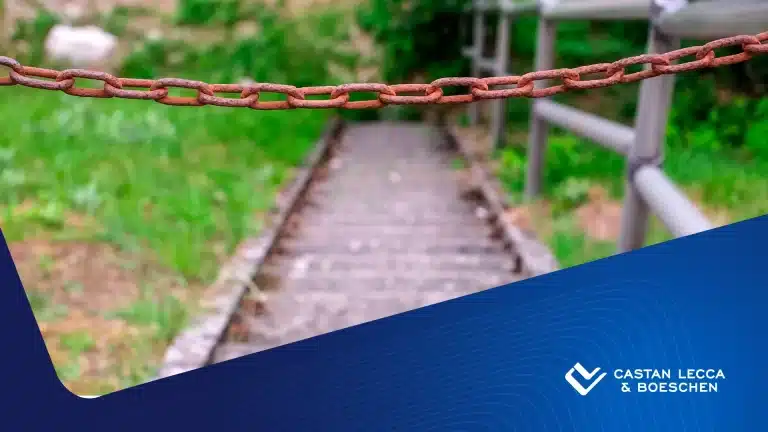
A rusty chain blocking unsafe stairs, illustrating a premise liability hazard that requires an Atlanta premises liability attorney.

When you enter a business, a public park, or even a neighbor’s home, you do so with the reasonable expectation that you will leave as healthy as you arrived. Unfortunately, unsafe conditions, ranging from slick floors to broken railings, can turn a routine outing into a life-altering medical emergency. Premises liability is a critical pillar of personal injury law that holds property owners accountable for accidents and injuries occurring on their land due to negligence. As we navigate the complex social and economic landscape of 2026, the duty of care that owners owe to the public is under more scrutiny than ever. At Castan, Lecca & Boeschen, our senior attorneys have spent over 30 years ensuring that “accidents” caused by preventable hazards lead to the justice and compensation victims deserve.

The legal theory behind premise liability is rooted in the responsibility of property owners to ensure their premises are reasonably safe for visitors. If a party has control and ownership over a space, they possess a legal duty to inspect for hazards and mitigate risks. In Georgia, the level of protection you are entitled to often depends on your status as a visitor, whether you were an invitee (there for business), a licensee (a social guest), or even a trespasser in certain narrow circumstances. In 2026, with the rise of automated delivery bots and increased foot traffic in mixed-use urban developments, these legal categories are becoming increasingly nuanced, making experienced legal counsel indispensable.

Properties Subject to Premises Liability Claims

In modern litigation, virtually any type of property can be the subject of a claim if hazardous conditions lead to injury. Our firm frequently handles cases involving the following environments:

  • Retail Stores and Malls: These remain high-risk areas for slips and falls caused by wet floors, bunched-up mats, or poorly lit parking lots.
  • Restaurants and Bars: Beyond standard spills, claims here often arise from broken furniture, overcrowded spaces, or even inadequate security in late-night venues.
  • Private Homes: Homeowners are not exempt; they may be held liable if social guests are injured by icy walkways, loose staircases, or aggressive pets.
  • Public Parks and Buildings: While suing a government entity involves complex “ante litem” notice requirements, these entities can be held liable for poorly maintained public facilities or grounds.
  • Hotels and Resorts: Claims in the hospitality sector often involve negligent security, unsafe pool areas, or food poisoning.
  • Schools and Daycares: These institutions face a high duty of care; claims typically result from negligent supervision or faulty playground equipment.

Statistics underscore the severity of this issue. In recent years, fall-related injuries led to over 8 million emergency room visits across the United States, many of which occurred on improperly maintained properties. In 2026, with rising healthcare costs in the Atlanta metro area, these injuries can easily bankrupt a family without proper legal intervention.

Strategic Steps to Filing Your Claim

If you are injured on another’s property, the hours and days immediately following the incident are critical for your legal success. You must prove that the property owner was negligent in their maintenance duties. We recommend the following immediate actions:

  1. Document the Incident: Use your smartphone to take high-resolution photos of the hazard that caused your injury. Collect the names and contact information of any witnesses before they leave the scene.
  2. Report the Injury: Notify the owner, manager, or supervisor on duty immediately. Ensure that an official incident report is filed and request a copy for your records.
  3. Seek Specialized Medical Attention: Do not “wait and see” if the pain subsides. Professional medical documentation is the only way to link your trauma directly to the property defect.
  4. Record Financial Impacts: Keep a meticulous log of all medical bills, pharmacy receipts, and lost wages. Document how the injury has affected your daily mobility and emotional well-being.

The Role of Exceptional Representation

A personal injury lawyer at Castan, Lecca & Boeschen reviewing a case for a slip and fall GA claim to secure compensation.

Navigating a premise liability claim in 2026 involves more than just filing a form. It requires standing up to massive insurance corporations that use sophisticated surveillance and algorithmic tools to minimize your payout. A personal injury lawyer from Castan, Lecca & Boeschen specializes in assessing the viability of your case and gathering the comprehensive evidence, including expert engineering testimony, needed to win.

Whether we are negotiating a fair settlement to avoid the stress of a trial or representing your interests in a Georgia courtroom, our goal remains the same: superior results. We fight to secure compensation for your current and future medical bills, lost income, and the physical pain and emotional distress you have endured. In rare cases of egregious negligence, we may also pursue punitive damages to punish the defendant and prevent future harm to others in our community.

If you believe your injury was caused by a property owner’s neglect, do not wait for the statute of limitations to expire or for the evidence to disappear. Contact Castan, Lecca & Boeschen today for a free, confidential consultation.


Bibliography and Verification

Part A (Internal Sources):

Part B (Recent External Research):

Georgia Tort Claims Act – Municipal Liability Rules: https://law.justia.com/codes/georgia/2022/title-50/chapter-21/article-2/

Pedestrian Safety 101: Understanding Your Rights in 2026

Pedestrian Safety 101: Understanding Your Rights in 2026

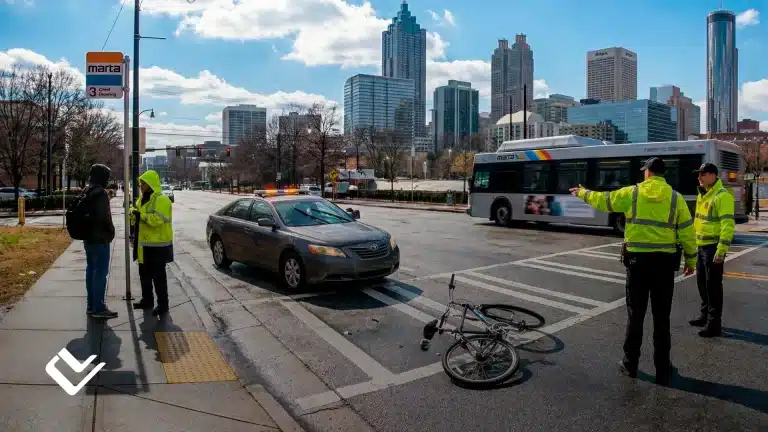
Police investigating a pedestrian accident at a bus stop in Atlanta to secure evidence.

Walking through the vibrant streets of Atlanta should be a simple, healthy way to navigate our city. However, as we move through 2026, the reality on our pavement is far more sobering. Despite the expansion of the Beltline and numerous “Complete Streets” initiatives, pedestrian accidents in Georgia remain at a near record high. In 2024 alone, over 290 pedestrians lost their lives on Georgia roads, and early data for 2026 suggests that the integration of heavier electric vehicles and increased driver distraction is creating a perfect storm of risk. At Castan, Lecca & Boeschen, we have spent 30 years representing those who were simply trying to cross the street and ended up with life altering injuries. We understand that in a collision between a two ton vehicle and a human being, there is no such thing as a “minor” accident.

The legal landscape of 2026 has brought new challenges to pedestrian litigation. With the rise of “micromobility” devices like e-scooters and high speed e-bikes, the definition of a pedestrian under Georgia law (O.C.G.A. § 40-1-1) is being tested. Furthermore, insurance companies are increasingly using “comparative negligence” arguments to blame victims for being distracted by their own smartphones. To secure the justice you deserve, you need more than just a lawyer; you need a team that understands the intersection of modern technology, urban design, and personal injury law.

The 2026 Reality: Why Pedestrian Fatalities are Surging

In the Metro Atlanta area, we are seeing a disturbing trend. While overall traffic fatalities have seen slight declines due to better vehicle safety technology, pedestrian deaths have not followed suit. There are three primary reasons for this in 2026. First is the “Vehicle Size Gap.” SUVs and large trucks now make up over 50 percent of the vehicles on our roads. Because of their higher hood profiles, they are more likely to strike a pedestrian in the chest or head rather than the legs, significantly increasing the likelihood of a fatality.

Second, we are battling a “Nighttime Crisis.” According to recent Georgia House Resolution 1177, approximately 84 percent of pedestrian fatalities in the state occur after dark. This has led to a major legislative push in 2026 for the “See & Be Seen” campaign, urging better street lighting and pedestrian visibility. However, at Castan, Lecca & Boeschen, we argue that the burden of safety should not fall solely on the person walking. Drivers have a fundamental “duty of care” to maintain a lookout, especially in poorly lit areas or near bus stops where foot traffic is predictable.

Third, the “Smart Technology Paradox” is in full effect. While cars are “smarter” than ever, drivers are more distracted. In 2026, we frequently see cases where a driver was distracted not just by a phone, but by the complex infotainment screens built into their dashboard. This split second of “inward” focus is all it takes to miss a pedestrian stepping into a crosswalk.

Common Causes and Liability in Crosswalk Accidents

Intersections are the most frequent sites of pedestrian trauma. Georgia law is clear: under O.C.G.A. § 40-6-91, drivers must stop and stay stopped for pedestrians within a crosswalk. This applies whether the crosswalk is clearly marked with white paint or is “unmarked” at an intersection. Yet, we see “Failure to Yield” accidents daily.

In 2026, “Left Turn” accidents have become a focal point of our litigation. Drivers making a left turn are often so focused on finding a gap in oncoming traffic that they completely fail to check the crosswalk they are about to enter. As your legal representatives, we don’t just take the driver’s word for it. We utilize traffic camera footage and “black box” data from the vehicle to prove exactly when the driver should have seen you. If a driver was speeding or distracted during that turn, we hold them fully accountable for the breach of their legal duty.

Navigating the “Jaywalking” Defense

A man walking safely through an Atlanta crosswalk, highlighting the need for pedestrian safety tips.

One of the most common tactics insurance companies use in 2026 is to label a victim a “jaywalker.” They will argue that because you were not in a marked crosswalk, you are 100 percent at fault for your own injuries. Under Georgia’s modified comparative negligence system, if you are 50 percent or more at fault, you receive nothing.

Our 30 years of experience tells a different story. Many areas of Atlanta and Norcross suffer from “sidewalk gaps”, stretches of road where there is no safe place to cross for half a mile or more. In these cases, the law still requires drivers to exercise “due care” to avoid colliding with any pedestrian on a roadway (O.C.G.A. § 40-6-93). If we can show that the road design was inherently dangerous or that the driver had ample time to see you and react, we can often overcome the jaywalking defense and secure a substantial recovery.

The Impact of Infrastructure: Suing Government Entities

Sometimes, the driver isn’t the only one at fault. In 2026, the City of Atlanta and the Georgia Department of Transportation (GDOT) are under increased pressure to fix “High Injury Network” corridors. These are specific streets, like sections of Peachtree Street or Memorial Drive, where accidents happen repeatedly due to poor design.

If your accident was caused by a malfunctioning walk signal, a hidden stop sign, or a lack of necessary traffic calming measures, we may have a claim against the government entity responsible for that road. These cases are exceptionally complex and involve strict “Ante Litem” notice requirements. In 2026, you may have as little as six months to notify a municipality of your intent to sue. This is why immediate legal consultation is vital. We have the resources to conduct the engineering studies needed to prove that the road itself was a contributing factor to your injury.

What to Do After a Pedestrian Accident

If you are hit by a car, your first priority is survival. However, if you are physically able, or if a family member can assist, certain steps are critical for your legal case. First, call 911. A formal police report is the most important document in your file. Second, if there are witnesses, get their contact information immediately. In 2026, witnesses often disappear into the crowd or a waiting Uber within minutes.

Third, do not apologize or admit fault. Even a simple “I didn’t see you” can be twisted by an insurance adjuster into an admission of negligence. Fourth, take photos of the vehicle that hit you, especially the point of impact on the car. This helps our accident reconstruction experts determine the speed and angle of the collision. Finally, contact Castan, Lecca & Boeschen before you speak to any insurance representative. They are not there to help you; they are there to close your file as cheaply as possible.

Why the Latino Community Trusts Our Firm

For over three decades, we have been the primary advocates for the Latino and immigrant communities in Georgia. We understand that for many of our clients, a pedestrian accident is not just a medical crisis but an immigration concern. You may fear that calling the police or filing a lawsuit will put your status at risk.

Let us be clear: Your legal status does not change your right to safety and compensation. In 2026, Georgia law continues to protect the rights of all injured persons, regardless of where they were born. At Castan, Lecca & Boeschen, we offer a completely bilingual environment where you can speak freely in Spanish and know that your concerns are understood. We handle the insurance companies and the legal hurdles so you can focus on your recovery and your family.

Exceptional Attorneys, Superior Results

The injury lawyers at Castan, Lecca & Boeschen in Atlanta ready to fight for your compensation.

A pedestrian accident can result in catastrophic injuries, from multiple fractures and internal organ damage to traumatic brain injuries. These require long term, expensive medical care. You deserve a settlement that covers not just your current bills, but your future needs.

We work on a contingency fee basis. You pay us nothing up front, and we only get paid if we win your case. In the complex landscape of 2026, don’t walk this path alone. Call Castan, Lecca & Boeschen today for a free consultation. We are here to ensure you get the justice you deserve and the compensation you need to move forward.

Bibliography and Verification

Part A (Internal Sources):

Part B (Recent External Research):

Propel ATL – 2024 Metro Atlanta Crash Report: https://www.letspropelatl.org/five_county_crash_report_2024

Navigating Car Accident Recovery in 2026

Navigating Car Accident Recovery in 2026

Police and ambulance at a night car wreck on I-285, requiring a car accident lawyer in Atlanta for compensation.

The moments following a car accident are often a blur of sirens, flashing lights, and a disorienting rush of adrenaline. In the high speed environment of 2026 Atlanta, where I-285 and the Connector are more congested than ever, a split second of distraction from another driver can change your life permanently. At Castan, Lecca & Boeschen, we have spent over 30 years standing by the side of those whose lives have been upended by the negligence of others. We have seen the evolution of Georgia law, the shifting tactics of insurance companies, and the rising complexities of proving liability in a digital age. Today, winning a car accident claim requires more than just showing you were hit; it requires a sophisticated legal approach that integrates modern technology with decades of courtroom experience.

The landscape of 2026 has brought about stricter medical verification requirements and a heavy reliance on digital telematics. Insurance adjusters are no longer just looking at the dent in your bumper; they are analyzing vehicle data logs, smartphone usage timestamps, and even drone footage from traffic intersections. To secure the compensation you deserve, you must move with precision from the very first hour. This guide outlines the essential steps and legal realities you must navigate to ensure that your physical and financial recovery is not left to the mercy of an insurance algorithm.

The Critical 48 Hour Medical Window

One of the most significant shifts we have seen in 2026 is the intense scrutiny placed on the timing of medical treatment. Insurance carriers have become increasingly aggressive in denying claims where the victim did not seek professional medical evaluation within 24 to 48 hours of the wreck. They argue that if you waited three or four days to see a doctor, your injuries were either not serious or were caused by something else entirely. In our decades of practice, we know that many serious injuries, such as traumatic brain injuries (TBI) or spinal disc herniations, do not manifest full symptoms immediately. The adrenaline of the crash masks the pain.

However, from a legal perspective, “waiting to see if it gets better” is a dangerous gamble. In 2026, Georgia’s medical record verification rules require doctors to certify that your injuries are consistent with the specific mechanics of the crash. By seeking immediate care at an emergency room or a specialized clinic, you create a contemporaneous medical record that links your physical trauma directly to the accident. This record is the foundation of your claim. Without it, even the most skilled attorney faces an uphill battle against an insurer who claims your back pain is simply the result of “normal wear and tear.”

Proving Fault in the Age of Distracted Driving

A distracted driver looking at his phone, highlighting the need to understand distracted driving laws 2026.

Distracted driving remains a leading cause of accidents in Georgia, despite the rigorous enforcement of the Hands-Free Georgia Act. In 2026, the data shows that nearly 55 percent of all traffic crashes involve at least one distracted driver. In Fulton and Gwinnett counties, the numbers are even higher. Proving that the other driver was texting or using an app requires a level of investigation that goes far beyond the police report. While a police officer may issue a citation for “failure to maintain lane,” we dig deeper to uncover the reason for that failure.

As your legal team, we utilize digital forensics to subpoena phone records and vehicle telematics data. Modern cars are essentially computers on wheels, recording speed, braking patterns, and steering inputs in the seconds before impact. If the other driver claims they were traveling the speed limit and paying attention, but the car’s “black box” shows they didn’t hit the brakes until the moment of impact, we have the objective proof needed to establish their negligence. This technical evidence is crucial in 2026, as it leaves no room for the “he said, she said” arguments that insurance companies love to use to delay payouts.

The 50 Percent Rule: Comparative Negligence in Georgia

Georgia follows a modified comparative negligence system, which is a critical concept every accident victim must understand. Under this rule, you can recover damages only if you are less than 50 percent responsible for the accident. If a judge or jury finds you 50 percent or more at fault, you receive nothing. Furthermore, your total compensation is reduced by your percentage of fault. For example, if your case is worth 100,000 dollars but you are found to be 20 percent at fault for speeding, your final recovery will be 80,000 dollars.

Insurance adjusters in 2026 are trained to find any small reason to shift even a fraction of the blame onto you. They will ask leading questions during “recorded statements” to get you to admit you were tired, looking at your GPS, or perhaps slightly over the speed limit. This is why we advise our clients to never speak with the at-fault driver’s insurance company without us. Our job is to protect your “percentage of innocence” and ensure that the liability is placed squarely where it belongs. With 30 years of experience, we know how to counter these blame shifting tactics and preserve the full value of your claim.

Understanding the True Value of Your Damages

Accident photos and a calendar used by Castan, Lecca & Boeschen to calculate a pain and suffering settlement GA.

What is your case actually worth? In 2026, the answer depends on a complex interplay of economic and non-economic damages. Economic damages are the tangible, out of pocket losses: your hospital bills, physical therapy costs, lost wages, and future medical needs. We work with life care planners and economic experts to project the total cost of your care, especially in cases of permanent disability. If you require surgery five years from now as a result of this accident, that cost must be included in today’s settlement.

Non-economic damages, often called “pain and suffering,” are more subjective but frequently represent the largest portion of a settlement. This covers the physical pain, emotional distress, loss of enjoyment of life, and the strain the injury puts on your relationships. In Georgia, there is no fixed formula for pain and suffering. It is based on the “enlightened conscience” of a jury. To maximize this, we tell your story. We don’t just present medical codes; we show how your inability to lift your child or return to your favorite hobby has diminished your life. In 2026, with the rising costs of living in Atlanta, securing a settlement that truly covers both your bills and your suffering is more important than ever.

Insurance Limits and the Necessity of UM Coverage

A harsh reality we often face is that many drivers in Georgia carry only the state minimum liability insurance, which in 2026 remains at 25,000 dollars per person. If you suffer a catastrophic injury requiring a week in the hospital, 25,000 dollars will not even cover your initial ER bill. This is where Uninsured or Underinsured Motorist (UM) coverage on your own policy becomes a lifesaver. UM coverage steps in to pay the difference when the at-fault driver has little or no insurance.

Many people hesitate to use their own UM coverage, fearing their rates will go up. However, in Georgia, insurance companies generally cannot raise your premiums for a claim where you were not at fault. As your attorneys, we conduct a thorough “insurance search” to identify every possible source of recovery, including umbrella policies, corporate insurance if the driver was working, and your own UM benefits. Our goal is to find the money you need to get your life back on track, regardless of how irresponsible the other driver chose to be.

The Statute of Limitations: Why Time is Not on Your Side

In Georgia, the general statute of limitations for a personal injury claim is two years from the date of the accident (O.C.G.A. § 9-3-33). While two years may seem like a long time, it passes quickly when you are focused on medical recovery. Furthermore, certain factors can shorten this window. For instance, if the at-fault driver was a government employee or driving a city vehicle, you may have as little as six months to provide formal notice of your claim.

There are rare instances where the statute can be “tolled” or paused. For example, if the at-fault driver is facing criminal charges like a DUI, the two year clock may be paused until the criminal case is resolved, up to a maximum of six years. However, waiting for the clock to run down is never a good strategy. Evidence disappears, witnesses move away, and memories fade. In 2026, the sooner we can secure dash cam footage and scene photos, the stronger your case will be.

Choosing the Right Representation

A dedicated car accident lawyer in Atlanta from Castan, Lecca & Boeschen ready to fight for your compensation.

The legal system in Atlanta is competitive and often works in favor of the massive insurance corporations that have endless resources. You need a law firm that has the financial stability to go toe to toe with these giants. At Castan, Lecca & Boeschen, we work on a contingency fee basis, meaning we advance all the costs of litigation. You pay us nothing unless we win your case.

Our bilingual team is dedicated to providing clear, compassionate, and aggressive representation. We understand the specific needs of the Latino community in Georgia and ensure that language is never a barrier to justice. Whether you were hit in a rear end collision in Norcross or a multi car pileup on I-75, we have the experience to handle the most complex litigation. Don’t let an insurance adjuster dictate your future. Call us at 678-825-3611 for a free consultation. Let us put our 30 years of experience to work for you.

Bibliography and Verification

Part A (Internal Sources):

Part B (Recent External Research):

Recent Court Interpretations of Comparative Negligence (2026): https://404hurtlaw.com/auto-accident-law-2026-in-georgia/

Proving Medical Malpractice in 2026

Proving Medical Malpractice in 2026

A medical negligence attorney in Atlanta reviewing records for proving medical malpractice in Georgia.

When we walk into a hospital or a doctor’s office, we are at our most vulnerable. We place our health, and often our very lives, in the hands of professionals who have sworn an oath to do no harm. When that trust is shattered by a careless mistake or a failure to follow basic medical protocols, the physical and emotional fallout can be devastating. At Castan, Lecca & Boeschen, we have spent over 30 years fighting for individuals who have been silenced by large healthcare systems. As we navigate the complex legal environment of 2026, the path to obtaining justice for medical negligence has become more technical and demanding than ever before.

The year 2026 has seen significant shifts in how Georgia courts handle personal injury and malpractice claims. With the full implementation of the 2025 tort reform packages, specifically Senate Bills 68 and 69, the rules regarding how we present evidence of medical expenses and how we argue for pain and suffering have changed. Proving medical malpractice is no longer just about showing a bad outcome. It requires a meticulous, high level legal strategy that accounts for new limitations on damages and stricter procedural hurdles. This guide is designed to help you understand what it truly takes to hold a healthcare provider accountable in the current era.

The Higher Bar: Understanding the Standard of Care

In 2026, the core of any malpractice case remains the “standard of care.” This is a legal term that refers to the level of care and skill that a reasonably competent healthcare professional in the same specialty would have provided under similar circumstances. To win a case, it is not enough to show that the surgery was unsuccessful or that you did not get better. We must prove that the doctor or nurse deviated from what their peers consider acceptable practice.

The challenge in 2026 is that the medical industry has become increasingly automated. We often see hospitals trying to hide behind “algorithmic medicine” or “protocol software” to justify errors. However, at our firm, we know that technology does not replace professional judgment. Whether it is a misdiagnosis in an Atlanta emergency room or a surgical error in a Norcross outpatient center, our job is to strip away the corporate excuses and show exactly where the human error occurred. We look for the moment where a doctor chose convenience over your safety, or where a hospital’s understaffing led to a fatal delay in treatment.

The Four Pillars of a Successful Claim

To successfully prove medical malpractice in Georgia, your legal team must establish four distinct elements. If even one of these pillars is missing, the court will likely dismiss the case before it ever reaches a jury.

First, we must prove the existence of a doctor,patient relationship. this establishes that the provider owed you a professional duty of care. Second, we must demonstrate a breach of that duty. This is where we prove that the provider failed to meet the standard of care. Third, we must show causation. This is often the most difficult part of a case in 2026. We must prove that the medical error, and not your underlying condition, was the direct cause of your injury. Finally, we must prove damages. This includes the physical, financial, and emotional toll the error has taken on your life.

Recent changes in Georgia law have added layers of complexity to the “damages” pillar. Under the 2025 reforms, we are now limited in how we present “phantom damages.” This means the jury now sees the difference between what a hospital billed and what was actually paid by insurance. This change was designed to lower settlement amounts, but our experienced attorneys know how to emphasize the real, human cost that numbers on a ledger cannot capture.

The Mandatory Gatekeeper: The Expert Affidavit

One of the most rigid requirements in Georgia law, which remains a cornerstone of litigation in 2026, is the Expert Affidavit (O.C.G.A. § 9,11,9.1). Unlike a standard car accident case, you cannot simply file a medical malpractice lawsuit and figure out the details later. At the very moment the lawsuit is filed, we must include a sworn statement from a qualified medical expert.

This expert must be someone who practices or teaches in the same field as the defendant and has done so for at least three of the last five years. The affidavit must specifically identify at least one negligent act or omission and provide a factual basis for that claim. In the current 2026 landscape, defense attorneys are more aggressive than ever in challenging the qualifications of these experts. They will look for any technicality to have the affidavit thrown out, which effectively ends the case. This is why Castan, Lecca & Boeschen works with a national network of top tier medical professionals. We ensure that our experts are not only highly qualified but also prepared to withstand the intense scrutiny of a courtroom.

Deadlines and the 2026 Backlog

Timing is everything in a malpractice case. In Georgia, you generally have two years from the date of the injury or death to file a claim. However, we also have what is known as the “Statute of Repose,” which creates an absolute five year cutoff from the date the negligence occurred, regardless of when you discovered it.

The reality of 2026 is that the courts are still dealing with administrative backlogs. Furthermore, the new 2025 laws allow defendants to request a “stay of discovery” the moment they file a motion to dismiss. This can freeze your case for months, preventing us from getting the records and depositions we need. By contacting us early, you give us the time needed to investigate and file your case before these procedural traps can be used against you. Waiting even a few months can make the difference between a successful recovery and being legally barred from ever seeking justice.

The Human Element: Why Bilingual Representation Matters

Medical malpractice is deeply personal. It involves your body, your privacy, and your future. For the Latino community in Georgia, these cases often carry an extra layer of difficulty due to language barriers and a lack of culturally sensitive care in some medical facilities. At Castan, Lecca & Boeschen, we take pride in being a bridge for our community.

We understand that when a doctor fails to provide a Spanish interpreter or ignores the concerns of a patient who doesn’t speak fluent English, it can lead to catastrophic medical errors. In 2026, we are seeing more cases where “translation software” in hospitals has failed, leading to incorrect dosages or misunderstood symptoms. Our bilingual team ensures that your voice is heard and that your story is told with the dignity it deserves. We don’t just translate words: we translate the pain and the injustice you have suffered into a legal argument that a Georgia jury can understand.

Holding Systems Accountable

Most medical malpractice in 2026 is the result of systemic failures. Large healthcare corporations often prioritize profit margins over patient ratios. When a nurse is forced to manage too many patients at once, or when a hospital fails to maintain its equipment, they are the ones who should be held responsible.

Our firm has the resources to take on these massive institutions. We conduct deep dives into hospital protocols, staffing records, and internal communications. We look for patterns of negligence that suggest your injury was not an isolated incident but an inevitable result of a flawed system. By holding these systems accountable, we not only secure compensation for you but also force changes that protect future patients in our community.

Choosing Your Advocates

The attorneys at Castan, Lecca & Boeschen ready to handle your hospital negligence lawsuit in Atlanta.

If you or a loved one has been injured by medical negligence, you are likely facing a mountain of new medical bills and a long road to recovery. You may be unable to work, and the stress on your family can be overwhelming. Do not try to fight the insurance companies alone. They have teams of lawyers whose only job is to ensure you receive as little as possible.

At Castan, Lecca & Boeschen, we offer more than just legal advice: we offer a partnership. We work on a contingency fee basis, meaning you pay nothing unless we win your case. Our 30 years of experience in the Georgia legal system gives us the insight needed to navigate the challenges of 2026 and deliver the superior results our clients expect. Call us today for a free, confidential consultation. Let us help you take the first step toward the justice you deserve.


Bibliography and Verification

Part A (Internal Sources):

Part B (Recent External Research):

American Medical Association: Impact of Lifting Damage Caps (2025): https://www.ama-assn.org/practice-management/sustainability/noneconomic-damage-caps-lifted-medical-liability-rates-jump

How to document accident scenes effectively to support insurance claims and legal cases

How to document accident scenes effectively to support insurance claims and legal cases

Accidents can be distressing and chaotic events, leaving individuals involved feeling overwhelmed and uncertain about the next steps. However, the importance of effectively documenting accident scenes cannot be understated, especially when supporting insurance claims and legal cases. 

Proper documentation is vital in establishing the facts, determining liability, and ensuring fair compensation for all parties involved.

The importance of documentation

When a car accident occurs, the immediate priority is ensuring the safety and well-being of everyone involved. However, as soon as it is safe to do so, documenting the scene becomes paramount.

Key elements of effective documentation

  • Photographic evidence: High-quality photographs of the accident scene, vehicle damage, injuries, road conditions, weather, traffic signs, and contributing factors are crucial.
    These images offer a visual representation of the scene’s conditions at the time of the accident. They can also help establish the severity of the collision and provide insights into potential causes. 
  • Video recordings: In addition to photographs, video recordings can provide a comprehensive view of the accident scene. Video footage can capture details that photos might miss, such as the behavior of other drivers, the sequence of events, and the immediate aftermath.
  • Witness statements: Statements from eyewitnesses can play a pivotal role in corroborating your version of events. Obtain contact information from willing witnesses, ask them to describe what they saw, and document their statements. Witness testimonies can provide an objective perspective that supports your account of the accident.
  • Police reports: If law enforcement responds to the accident scene, a police report will be generated. This report can provide an official account of the accident, including details about the involved parties, witness statements, and the officer’s assessment of the scene. Request a copy of the police report for your records.
  • Medical records: If injuries were sustained in the accident, documenting medical records is essential. Medical reports, X-rays, prescriptions, and receipts for medical expenses should be preserved. These records help establish the extent of your injuries and the associated costs for treatment.
  • Damage assessment: Document the damage to all vehicles involved in the accident. Capture photographs from various angles, including close-ups of specific areas of damage. Obtaining repair estimates from reputable mechanics can further validate the extent of damage and repair costs.

  • Road conditions and environment: Note the prevailing road conditions, including debris, potholes, skid marks, and any other factors that might have contributed to the accident. Additionally, document lighting conditions, weather, and visibility.
  • Personal belongings: If personal items were damaged or lost in the accident, such as electronic devices, clothing, or luggage, document their condition and value. This information could be relevant when seeking compensation for property damage.
  • Communication records: Keep records of any communication related to the accident. This includes conversations with insurance agents, other drivers, and medical professionals. Written records of these interactions can serve as evidence of the steps you’ve taken and the information you’ve provided.
  • Time and date stamps: Note the exact time and date of the accident. These details can be critical when establishing a timeline of events and determining liability.

Proper documentation can significantly impact the outcome of a legal case. Attorneys and insurance companies rely on detailed evidence to build strong cases and accurately assess liability. Adequate documentation can expedite the claims process and ensure that you receive fair compensation.

The Benefits of Effective Documentation

Documentation plays a crucial role in supporting an insurance claim or legal case. Here’s how effective documentation can help:

Establishing proof: Documentation provides tangible evidence to support your claim or case. It helps establish the facts and provides a clear record of the incident, injuries, damages, and other relevant details.

Demonstrating causation: Documentation can help demonstrate the causal relationship between the incident and the injuries or damages claimed. It shows that the injuries or damages directly resulted from the incident in question.

Providing credibility: Well-documented evidence enhances your credibility, as it shows that you have taken the time and effort to gather and organize relevant information. This can strengthen your position and make your claim or case more persuasive.

Supporting valuation of damages: Documentation, such as medical records, bills, and receipts, helps support the valuation of damages. It provides proof of the expenses incurred, including medical treatments, property repairs, and other related costs.

Negotiating settlements: Strong documentation can be valuable during settlement negotiations with insurance companies or opposing parties. It provides a basis for calculating fair compensation and can help you present a compelling case for the amount you seek.

Preparing for litigation: If your case goes to court, thorough documentation becomes even more critical. It provides the necessary evidence to present your case effectively and counter any opposing arguments.

Contact Castan Lecca & Boeschen

In the unfortunate event of an accident, the importance of thorough documentation cannot be overstated. If you find yourself in such a situation, remember that the Castan Lecca & Boeschen team is here to assist you. Our experienced attorneys can guide you through the process of documenting the accident scene effectively and help you navigate insurance claims and legal proceedings. Don’t hesitate to contact us for advice and support when needed.

Documenting accident scenes effectively is crucial in supporting insurance claims and legal cases. The information and evidence you gather can make a significant difference in establishing liability, receiving fair compensation, and ensuring a smoother claims process. 

By following the guidance provided by legal experts and incorporating elements such as photographic evidence, witness statements, and accurate records, you can enhance your chances of a successful resolution after an accident. Remember, documentation is your advocate after an unfortunate event, so prioritize this process to protect your rights and interests.


The Lifesaving Shield: The Crucial Role of Seatbelts in Reducing Car Accident Injuries and Fatalities

The Lifesaving Shield: The Crucial Role of Seatbelts in Reducing Car Accident Injuries and Fatalities

Every time you step into a vehicle, whether for a quick errand or a long road trip, one simple action can make a world of difference in ensuring your safety: wearing a seatbelt. Seatbelts are a cornerstone of vehicle safety, with a proven track record of significantly reducing injuries and fatalities in car accidents. 

As a car accident law firm at Castan Lecca & Boeschen, we understand the vital role seatbelt usage plays in minimizing the impact of accidents.

The cold, hard facts

According to the Centers for Disease Control and Prevention (CDC), more than half of all drivers and passengers who die in motor vehicle crashes each year were not wearing seatbelts at the time of the collision. That’s a staggering statistic that underscores the lifesaving potential of this simple safety measure. In fact, the CDC reports that seatbelts reduce the risk of death in car crashes by about 45% and the risk of serious injury by about 50%.

Mechanisms of protection

The mechanism by which seatbelts protect occupants is straightforward yet critical. In the event of a collision, the force generated can cause the body to move suddenly and violently. Seatbelts restrain occupants and distribute these forces over the strongest parts of the body – the hips and shoulders. This helps prevent occupants from striking the vehicle’s interior or being ejected altogether, reducing the severity of injuries.

Types of injuries prevented

Seatbelts effectively prevent a range of injuries that can occur during a car accident, including:

  • Head injuries: By keeping passengers securely in their seats, seatbelts prevent the head from striking the windshield, dashboard, or other hard surfaces.
  • Whiplash and neck injuries: Properly worn seatbelts help control the head and neck’s sudden forward and backward movement, reducing the risk of whiplash and other neck-related injuries.
  • Ejection: One of the most severe consequences of not wearing a seatbelt is the risk of ejection from the vehicle during a crash. Ejection dramatically increases the likelihood of fatal injuries.
  • Internal injuries: The force of a collision can cause passengers to collide with the vehicle’s interior or each other. Seatbelts mitigate this impact, reducing the risk of internal injuries.
  • Spinal cord injuries: seatbelts prevent sudden jolts that can lead to spinal cord injuries, which can have lifelong consequences.
  • Airbag effectiveness: Airbags are designed to work in conjunction with seatbelts, not as a replacement. Without a seatbelt, airbags alone may not provide adequate protection during a crash.

Real-life impact

To emphasize the real-life impact of seatbelt usage, consider the case of a recent car accident that occurred in Georgia.

In this incident, a vehicle collided head-on with another car while traveling at high speed. The occupants of the first car were wearing their seatbelts, while those in the second car were not. The results were striking: the occupants of the first car suffered minor injuries and were able to walk away from the accident, while the occupants of the second car sustained severe injuries that required hospitalization.

Beyond the basics: advancements and teen safety

Seatbelt usage is not just about buckling up – it’s about embracing technological advancements and addressing specific challenges, such as encouraging teenagers to make seatbelt usage a habit. 

Advanced seatbelt technologies, like pre-tensioners and load limiters, enhance the protection provided by traditional seatbelts. They tighten the belt during a collision to keep occupants firmly in place while minimizing the risk of injury. However, fostering seatbelt habits among teenagers can be challenging. 

According to the National Highway Traffic Safety Administration (NHTSA), teen drivers have a lower seatbelt usage rate than other age groups. Educational campaigns and parental influence play a crucial role in motivating young drivers to prioritize their safety.

The evidence is undeniable: wearing a seatbelt can be the difference between life and death in a car accident. The statistics, research, and real-life examples all underscore the importance of this simple yet crucial safety measure. As a law firm committed to the well-being of Georgia’s residents, Castan Lecca & Boeschen urges you to always wear your seatbelt – no matter how short the trip or your familiarity with the route.

If you or a loved one have been involved in a car accident, remember that our team at Castan Lecca & Boeschen is here to help. Our team is dedicated to protecting your rights, and you receive the compensation you deserve. 

Contact us today for a free consultation, and let us guide you through the legal process while you focus on your recovery and healing.

Remember, a seatbelt is more than just a strap – it’s a lifeline that can save lives and prevent life-altering injuries. Make it a habit, not just a choice, to buckle up whenever you get in a vehicle. Your safety and the safety of your loved ones depend on it.


(864)761-4141

Preston Moore

Attorney

Preston Moore is a trial attorney whose injured clients have seen more than $30 million in settlements and jury verdicts. An alumni of Georgetown University (B.A.) and Harvard Law School (J.D.), Preston started practicing law at a multinational firm in Atlanta where he represented large corporations in high-value lawsuits. From there, Preston joined a well-respected product liability practice in Atlanta where he focused on representing two key sorts of cases: workplace product injury matters and high-limit insurance litigation. Now, Preston serves his clients by providing high-quality, no-nonsense representation for those catastrophically injured by the negligence of others, whether by settlement (where his clients have obtained over $10 million in recoveries since January 2024) or trial (where his clients have earned over $10 million in jury verdicts since 2022). Preston is loved by Jesus and attends Calvary Baptist Church in Smyrna. He lives in Kennesaw, GA with his wife, Brooks (9), Tripp (3), Emma Kate (newborn), and his Pomeranian, Birdie.

Dustin Thompson

Attorney

Dustin Thompson was raised in rural Camilla, Georgia. Dustin graduated from Georgia Southern University majoring in political science and history. After graduation, Dustin obtained a law degree from Georgia State University College of Law in Atlanta. Before becoming a lawyer, Dustin worked a variety of jobs from a watermelon farm in Mitchell County to a policy think tank in Washington D.C. Dustin has practiced law almost exclusively in the workers’ compensation arena since 2014. For nearly a decade, he worked for a large defense firm in Georgia representing employers and insurers and gaining the invaluable experience and knowledge of how insurers defend claims. In 2023, Dustin joined the firm to use his expertise and litigation skills to help individuals who have been injured as a result of work accidents and third-party negligence.  Dustin has been repeatedly recognized by Best Lawyers: “Ones to Watch” in the practice of workers’ compensation. Outside of work, Dustin enjoys traveling, hunting, and attending sporting events. He and his family are active in Buckhead Church.

MICHAEL BOESCHEN

Attorney

Michael Boeschen (Mike) was born in Wichita, KS and raised in Chattanooga, TN. Mike graduated from The McCallie School and went on to study history, Spanish, and Latin American Studies at Southern Methodist University in Dallas, TX. After graduation, he went on to pursue a law degree from the University Of Georgia School Of Law. During law school, Mike participated in the Legal Aid Clinic, assisting in the defense of indigent criminal defendants. Mike has been licensed to practice law in Georgia since 2002 and his main practice area consists of representing injured workers as they navigate through the Georgia workers’ compensation system. Mike is also fluent in Spanish. In his spare time Mike enjoys following soccer, cooking, and spending time with his wife and two young daughters. Mike and his family are parishioners of the Holy Spirit Catholic Church in Sandy Springs, GA

CHRISTIAN PECONE

Attorney

ED DENKER

Attorney

Edward Denker was born in Philadelphia, PA but has made Georgia his home since 1999. He graduated from the Pennsylvania State University with a Bachelor’s degree in liberal arts. He then earned his Juris Doctorate from the University of Georgia. Edward spent his first years in practice representing clients in personal injury and wrongful death claims. He then spent more than a decade honing his litigation skills representing employers and insurers in workers’ compensation claims, where he gained immense experience and knowledge of how insurers defend those claims. In 2017, Edward returned to his passion of representing people who have been injured at work or through the negligence of others. When he isn’t working, Edward enjoys spending time with his wife and their two children. He is also an avid sports fan, and enjoys cooking and travel

ILIANA DOBREV

Attorney

Iliana Dobrev was born in Bulgaria. After high school, she immigrated to the United States to study law. She graduated magna cum laude from Georgia State University with a Bachelor’s in political science concentrating on pre-law and minoring in Spanish. In 2015, she graduated from Georgia State University College of Law. While in law school, Iliana completed a Graduate Research Assistantship in Labor and Employment Law and Employment Discrimination and two externships in Immigration Law. As an immigrant herself, Iliana is passionate about advocating for and defending immigrants. She is delighted to help families stay together and pursue the American dream. Iliana is a member of the American Immigration Lawyers Association and worked in both a fellowship and a firm specializing in immigration law. Iliana is fluent in Bulgarian and Spanish

AREAS OF PRACTICE 
  • Immigration
  • Misdemeanor Criminal Defense
  • Accidents at Work and Personal Injury
  • Guardian Ad Litem
  • Uncontested Divorce
  •  
BAR ADMISSIONS
  • State of Georgia, November 2015
  • Supreme Court of Georgia, November 2015
  • Executive Office of Immigration Review (EOIR), 2016
  • U.S. District Court for the Northern District of GA, May 2021


EDUCATION
  • J.D., Georgia State University College of Law, 2015
    • GRA
  • B.A., Georgia State University, Bachelors of Arts, Political Science/Pre-Law, 2011
    • Minor in Spanish
    • Magna Cum Laude


CERTIFICATIONS AND SPECIAL DESIGNATIONS
  • Health Law Certification, Georgia State College of Law, May 2015
  • Guardian ad Litem, Atlanta Volunteer Lawyers Foundation, July 2025


PRESENTAIONS AND SPEAKING ENGAGEMENTS 
  • Inadmissibility And Deportability, 2022 Georgia Alabama Aila Chapter Annual Conference “Lawyers At Work: Building A Stronger Immigration Bar”, CLE Speaker, March, 2022.
  • Congressional Ambassador, AILA National Day of Action, Washington, D.C. March, 2024.
  • Panel on Migrant Justice and Undocumented Youth Struggles, Georgia State University College of Law, 2021.


ORGANIZATIONS
  • State Bar of Georgia
  • Cobb County Bar Association
  • AILA, American Immigration Lawyers Association
  • Georgia Democracy Taskforce
castan&lecca-iliana-bio

KEN THAXTON

Attorney

Ken Thaxton was born and raised in Roberta, GA. When Ken was a child, his father started a trucking business, which Ken ultimately spent over ten years working with through his late teens and twenties. Ken graduated from Houston County High School in Warner Robins, GA in 2001 with a 4.0 GPA. He then studied Business and Information Technology at Macon State College, ultimately graduating with a 4.0 GPA in 2004. After graduation, Ken continued to work with his father’s trucking company, and in late 2005, Ken and his father started an aircraft charter company, Southern Jet, Inc., under Part 135 of the Federal Aviation Regulations. Ken served as President of Southern Jet from 2006 until 2010, when he and his father sold the company. Ken is a Commercially Licensed Instrument, Multi-Engine Pilot. While serving as President of Southern Jet, Ken started Law School at the University of Georgia School of Law in 2009. Ken focused primarily on business and civil law, including Workers’ Compensation, while at UGA. He graduated Cum Laude and in the top 25% of his class from UGA Law in 2012. Ken is a licensed to practice law in the State of Georgia, and he is also a licensed neutral (mediator) in the State of Georgia. Ken represents small businesses in transactional matters and business conflicts, and he also represents injured workers and Plaintiffs injured in cases of negligence. During his spare time, Ken enjoys swimming, cycling, sporting clays, and fishing. He also does charity work with a national scholarship fund
castan&lecca-ken-bio

ALEXANDER LECCA

Attorney

Alexander Lecca (Alex) was born in Miami, Florida to immigrant parents from Cuba and Peru. Alex graduated from Coral Gables High School, where he was a recipient of the Elsa Glazer Award (given to students who graduate with a 3.5 GPA and above). He went on to study marketing at the University of Miami School of Business Administration. At the University of Miami he was also a member of the Pi Kappa Alpha fraternity. After graduation, he went on to pursue a law degree from St. Thomas University School of Law. In law school, Alex received several book awards and graduated Cum Laude. During law school Alex clerked for the Honorable Beth Bloom, had an internship with the Miami-Dade County Public Defender’s office, and clerked for a prestigious litigation law firm. Alex is licensed to practice law in both Georgia and Florida and handles workers’ compensation and personal injury cases. He is also a registered mediator with the Georgia Office of Dispute Resolution. Alex is also fluent in Spanish. During his spare time, Alex enjoys outdoor activities with his wife and four children. He also helps coach his children’s baseball, football, basketball, and soccer teams. Alex and his family are parishioners of St. Catherine of Siena Catholic Church

DANIEL CASTAN 

Attorney

Dan Castan is a senior partner at Castan and Lecca, PC in Buckhead and represents injured workers before the State Board of Workers’ Compensation and plaintiffs in State and Superior Courts of Georgia for injuries suffered in accidents. Dan litigated one of the seminal claims securing the rights of undocumented workers to receive Workers’ Compensation benefits in the state of Georgia when injured in the case of Wet Walls, Inc. vs. Ledesma. Dan has successfully fought and settled multi million dollar cases. He was born and raised in Newark, New Jersey to immigrant parents from Cuba. He received a Bachelor of Arts degree from Boston College and received his Juris Doctor from The Washington College of Law at The American University in Washington D.C.  Dan was admitted to the Georgia Bar in November, 1993.  He is an active member of the Hispanic Chamber of Commerce, Georgia Trial Lawyers Association, Atlanta Bar Association and the Workers’ Compensation Section of the State Bar of Georgia. Dan is a founding member and Director of the Latino Victory Fund Georgia and serves on the Board of The Latin American Association. Dan has been dedicated to getting Latinos elected to local, state and Federal offices in Georgia. He has been a Big Brother through Big Brothers and Sisters of Metro Atlanta and a mentor through The Latin American Association’s mentor/mentee program. Dan is married with two children.