

Landscaping combines outdoor work, machinery, lifting, chemicals and transportation. Risks vary by task and job site. OSHA’s landscaping hazard guidance identifies hazards and possible controls; it is not a ranking of injury frequency. Older workforce or injury counts should not be treated as current totals.
Injuries and Exposures in Landscaping
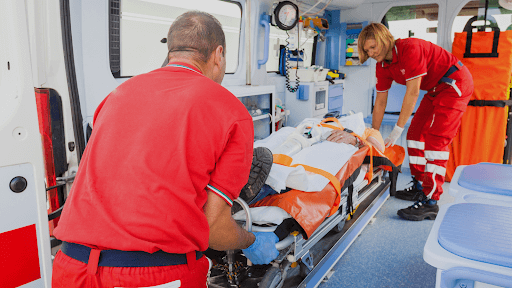
Potential injuries include cuts and amputations, falls, struck-by injuries, hearing damage, heat illness, chemical exposure and musculoskeletal problems. Electrical contact, unstable equipment and falling branches can be fatal. A person can be injured despite taking care; prevention involves job planning, equipment condition, training and supervision as well as protective equipment.
Review the work before starting. Identify changing ground conditions, traffic, overhead lines and underground utilities. Damaged guards, unfamiliar machinery or unsafe conditions should be addressed through the employer’s safety procedures rather than improvised around.
Match Prevention to the Landscaping Task

Soil preparation and grading: train operators for the equipment, inspect guards and keep people away from moving blades and vehicle paths. Uneven terrain and loading or transporting equipment require planning.
Irrigation: locate utilities before digging, keep clear of trenching machinery and assess excavation hazards. Use the chemical label and safety data sheet for adhesives and cleaners; gloves alone do not resolve every exposure.
Hardscape construction: saw guards, appropriate cutting procedures, lifting assistance and excavation protection must match the work. Keep access routes clear and control exposure to noise and flying material.
Planting: plan lifting and transport, use suitable tools and arrange assistance for heavy loads. The OSHA heat guidance emphasizes addressing heat risk through measures such as water, rest, shade, training and an emergency plan.
Lawn maintenance: stay clear of rotating blades, maintain equipment safeguards and select eye and hearing protection for the exposure. Follow safe shutdown procedures before servicing or clearing machinery.
Tree care: falling limbs, chainsaws, climbing and electrical lines require trained personnel and suitable procedures. Establish exclusion zones and appropriate fall protection. Ordinary gardening experience does not qualify someone for hazardous work near energized lines.
These controls reduce risk; they do not guarantee that every accident will be prevented. Ask for task-specific instructions when the work, equipment or conditions change.
Georgia Rights After a Work-Related Injury

Workers’ compensation may provide benefits for a covered employment-related injury without requiring proof that the employer was negligent. Being on a shift alone does not establish every coverage or causation requirement. Employment status, coverage and how the injury arose need review.
Obtain emergency care when needed. For nonemergency treatment, ask about the employer’s valid physician panel or managed-care arrangement and authorization rules. The Georgia State Board’s FAQs explain medical and income benefits; those benefits have eligibility requirements and limits.
Notify the employer immediately or as soon as practicable. Under O.C.G.A. § 34-9-80, notice generally must be given within 30 days, subject to statutory exceptions. Employer notice is separate from filing a claim with the Board. Keep a written record and do not wait for an insurer’s response to investigate deadlines.
Workers’ compensation is generally the exclusive remedy against a covered employer for a covered injury. Employer negligence does not automatically create an additional injury lawsuit. A claim against a legally responsible third party may be possible, with separate proof and reimbursement issues.
Preserve the incident report, witness contacts, equipment information and medical restrictions. Castan, Lecca & Boeschen can assess disputed benefits and possible legal options. No consultation can guarantee a precise recovery, maximum payment or automatic vocational rehabilitation.