
Georgia’s hands-free driving law took effect on July 1, 2018. It is an established rule, not a new announcement for this year. The Governor’s Office of Highway Safety guide and O.C.G.A. § 40-6-241 explain the restrictions and exceptions.
Do not hold or support a device with your body. While driving, do not hold a phone in your hand or balance it against your shoulder. A hands-free conversation does not remove the general duty to exercise due care and avoid distractions.
Do not type, read messages, or watch video. The law restricts writing, sending, and reading text-based communications. It also restricts watching video other than navigation data and recording or broadcasting video, while recognizing continuously recording vehicle cameras. A mounted phone does not make texting, social media, or a video call lawful.
Set up music and directions before traveling. The state guidance allows navigation and voice-based functions within the law’s limits. It says not to program internet radio or music-streaming applications while on the road, including at a traffic light. Stopping at a red light is not the same as being lawfully parked.
Use hands-free calls carefully. A compatible earpiece, speakerphone, or vehicle Bluetooth system can allow a call without holding the device. Voice-to-text is treated differently from manually typing a message. These allowances do not authorize a driver to look away from the road to operate an application or to watch video.
Exceptions have limits. The statute addresses reporting a traffic accident, medical emergency, fire, criminal activity, or hazardous road condition, certain official duties, and use while lawfully parked. Do not treat a routine call or a temporary traffic stop as an emergency exception. Commercial drivers also face additional provisions.
If you need to change settings or use the device in a way that distracts you, reach a safe place and park lawfully first. A hands-free system can reduce the need to handle a phone, but it does not make every task safe.
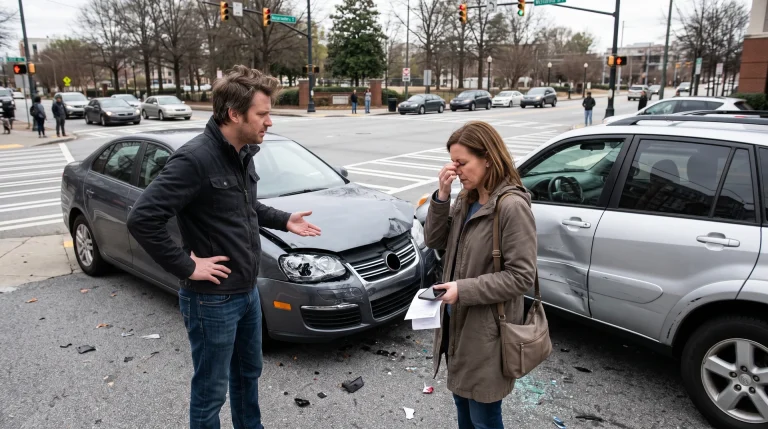
After a crash involving suspected phone use, preserve the crash report, photographs, and available witness information. A possible violation is one part of an investigation; it does not automatically resolve fault or damages. This guide provides general information and does not predict the outcome of a citation or injury claim.