
Seat belts protect passengers in every seat. Georgia’s legal requirements differ by age and seating position. A legal exception is not a recommendation to travel unrestrained. Use an appropriate restraint and follow the vehicle and child-seat manufacturer’s instructions.
Adults and older children. O.C.G.A. § 40-8-76.1 generally requires front-seat occupants of passenger vehicles to wear a seat belt, subject to the statute’s exceptions. Minors ages 8 through 17 must be restrained in any seat. The adult front-seat requirement should not be mistaken for a safety recommendation that adults ride unbelted in the back.
Children under 8. Under O.C.G.A. § 40-8-76, children younger than 8 generally need a federally approved child restraint appropriate for their height and weight and must ride in the rear seat, subject to specific exceptions. A child who weighs 40 pounds is not automatically exempt from the child-restraint requirement.
The statute provides limited rules for lap-belt use and front-seat placement in particular vehicle or seating circumstances. It also addresses height and medical exceptions. The Governor’s Office of Highway Safety FAQ explains why the 40-pound rule is conditional and describes the exemption for a child taller than 4 feet 9 inches. Check the complete requirements rather than treating age or weight alone as permission to remove a booster.
Seat belts and civil injury claims. Georgia’s SB 68 of 2025 changed the rule concerning evidence of nonuse. Under the amended § 40-8-76.1(d), failure to wear a seat belt in any equipped seat may be considered on issues such as negligence, causation, comparative fault, or damages, subject to the rules of evidence. The older blanket statement that this evidence can never affect a civil claim is no longer accurate.
Nonuse does not automatically prove who caused a collision or eliminate a claim. The applicable law, filing dates, injuries, and evidence still require analysis. The statute also separately restricts cancellation of coverage or increased insurance rates based on nonuse; that provision is distinct from civil evidence and damages.
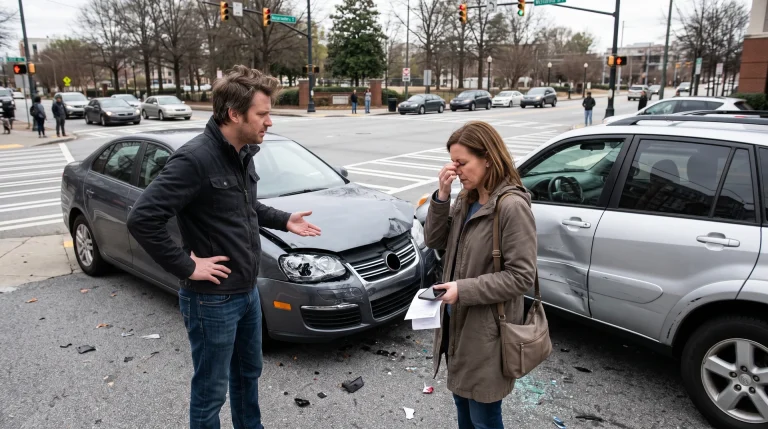
After a collision. Seek necessary medical care and preserve photographs, restraint information, vehicle records, and the crash report. If a claim involves a restraint or a child passenger, ask counsel to review the relevant rules before accepting a settlement. A fine, safety recommendation, and civil liability question are different matters.
Always buckle up and secure children using a properly selected and installed restraint. When planning a trip, check that every passenger has an appropriate restraint available. If you have questions about a civil claim, obtain advice based on the actual facts; no particular result is guaranteed.