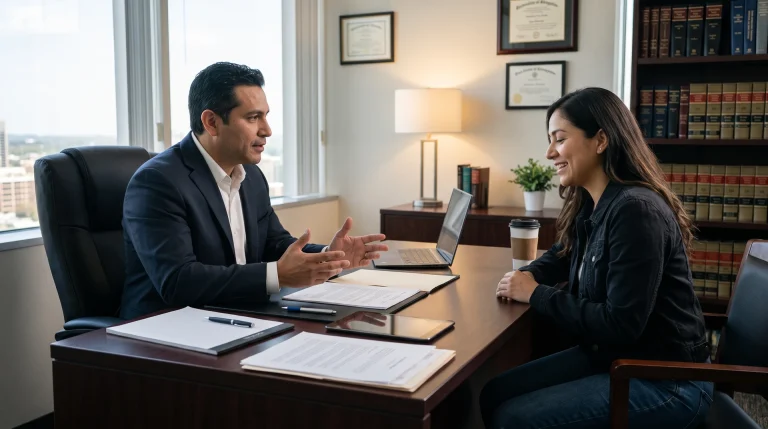

Trust in a personal injury lawyer should rest on information you can check and a clear understanding of the working relationship. Reviews and recommendations can help you identify candidates, but neither a testimonial nor an award proves how your own claim will turn out.
Verify the lawyer and relevant experience. Use the State Bar of Georgia’s public lawyer resources to check the professional’s information and available selection guidance. Ask who will be responsible for your file and what experience that person has with your type of injury and procedure. A general practice description is not a substitute for discussing the actual case.
Ask about practical arrangements. Useful topics for an initial discussion include:
- Responsible attorney
- Relevant experience
- Contact arrangements
- Written fee terms
- Case expenses
- Known deadlines
- Language assistance
Find out how updates are delivered, who answers routine questions, and what to do if your medical condition or contact information changes. If you need an interpreter or translated explanations, discuss those arrangements before signing. Regular communication should include realistic uncertainty, not only encouraging statements.
Read the fee agreement. The Georgia Rules of Professional Conduct address fees and communication. A contingent fee agreement must be in writing and explain how the fee is calculated and how expenses are treated. Ask what costs you might owe and whether they are deducted before or after the fee calculation. Do not rely on a short advertising phrase to answer those questions.
Ask how the claim will be assessed. A useful discussion covers liability, available evidence, coverage, medical documentation, deadlines, and the uncertainties that may affect the next step. An early estimate is not a guaranteed settlement. Be cautious about a promised dollar amount or an assertion that every case must go to trial.
Put reviews and awards in context. Look at the source, date, selection criteria, and whether an award describes an individual or the firm. An old award should not be presented as current proof of client satisfaction or an absence of complaints. Compare the available information with your own questions and the written agreement.
If communication concerns arise, request an explanation and relevant copies of your documents. The State Bar also provides public resources concerning client assistance, fee disputes, and complaints. These channels have different purposes and do not decide the value of an injury claim.
You can review the Castan, Lecca & Boeschen team and ask these questions during a consultation. Choose representation after understanding the scope and terms; no lawyer can guarantee a particular result.