
When a driver leaves after a collision, protecting people and preserving information come first. Georgia’s hit-and-run statute sets duties to stop, exchange information and assist in covered circumstances. Whether a particular incident violates the law depends on the facts; leaving does not by itself prove every disputed issue in an injury claim.
Prioritize safety and medical care. Call 911 when there are injuries, immediate danger or an emergency. Follow responders’ directions. Do not chase the other vehicle, step into traffic or risk another collision to obtain a plate number. If a spinal injury is suspected, avoid unnecessary movement and follow emergency instructions.
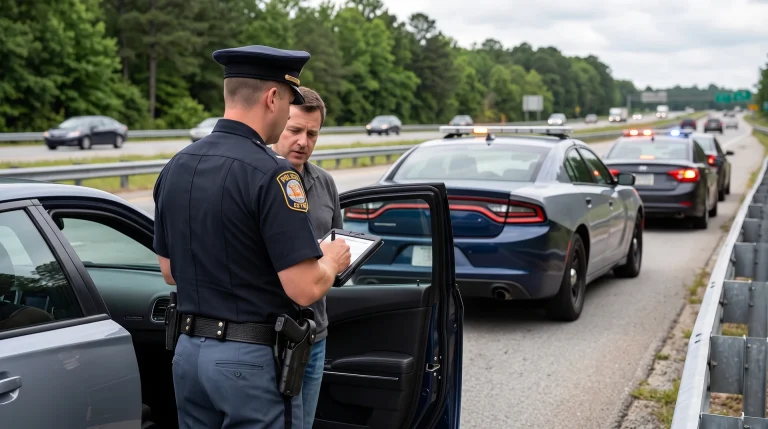
Report and document. Provide law enforcement with the location, time, direction of travel and whatever details you actually remember. A partial plate, vehicle description or nearby camera may be useful. Do not invent missing information. Keep the incident number and ask how to obtain the official report; personal notes are useful but do not replace required reporting.
- Photograph damage and the surroundings only when safe.
- Save witness names and reliable contact details.
- Request preservation of relevant camera footage.
- Keep original images, records and communications.
Investigators may identify the driver, but there is no guarantee. Preserve medical records, repair estimates, bills and work restrictions regardless of whether identification is immediate. Promptly notify potentially applicable insurers and ask about policy notice requirements.
Review uninsured motorist coverage. A claim may involve your own UM/UIM coverage if it applies, or another available coverage such as collision or medical payments. These are different coverages with different conditions, limits and possible deductibles. A liability policy alone does not establish that all of your losses will be paid.
Under O.C.G.A. § 33-7-11, an unknown owner or operator can be treated as uninsured, subject to statutory and policy requirements. The statute generally requires physical contact in an unknown-motorist claim unless the claimant’s description is corroborated by an eyewitness other than the claimant. Do not replace that requirement with a promise that your account alone will always suffice, or a rule that the witness must always be unrelated.
The statute addresses both bodily injury and property damage; it is inaccurate to say a fleeing unknown driver can never qualify for property-damage coverage. The actual policy, insured status, type of loss, evidence, reporting and other conditions still need review. UM/UIM is not automatic payment simply because the other driver left.
Coverage purchased after an accident does not solve the existing loss. Review current declarations and endorsements, and discuss future coverage choices with a licensed insurance professional. Outdated national uninsured-driver percentages do not establish coverage or the outcome of your individual claim.
Before signing a release or treating the matter as closed, obtain advice about coverage, proof and deadlines. Castan, Lecca & Boeschen can review the accident and available policies. Neither an investigation nor legal representation guarantees that the driver will be found or that every loss will be reimbursed.