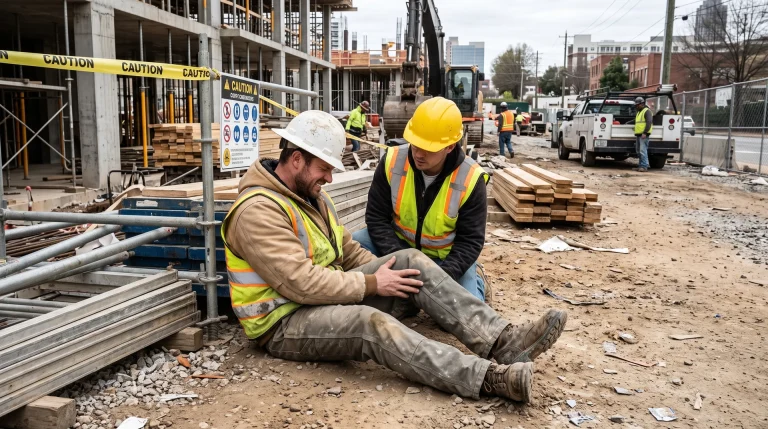

When we think of a workplace accident, the image that usually comes to mind is a dramatic and sudden event: a fall from a scaffold in Atlanta, a machinery malfunction, or a slip-and-fall in a warehouse. However, not all devastating injuries happen in a single second. Many of the most debilitating conditions suffered by workers in Georgia develop silently over months or even years of repetitive motion.
At Castan, Lecca & Boeschen, we know that chronic pain keeping you from doing your job is just as real as a broken bone. That is why we offer a completely free evaluation for your workers' compensation case. We want to be abundantly clear from the start: this free consultation policy is strictly exclusive to personal injury and workers' compensation cases. All of our immigration consultations are paid, without exception, and carry a mandatory fee of $150.
Below, we will explain the legal difference between sudden injuries and gradual ones, the challenges you face in proving your claim, and what medical conditions commonly qualify for benefits in our state.
The difference between a Sudden Injury and a Gradual or Occupational Disease Claim
Georgia's workers' compensation system legally distinguishes between a standard accidental injury and an occupational disease or repetitive stress injury.
A sudden injury is an accident with a highly specific date, time, and location. It is straightforward to report to your supervisor because the exact moment of trauma is obvious and often witnessed.
On the other hand, gradual claims or occupational diseases occur due to continuous exposure to certain working conditions. Georgia statute O.C.G.A. § 34-9-280 defines occupational diseases and sets strict criteria. For a disease to be compensable under this statute, it cannot be an "ordinary disease of life" to which the general public is exposed; it must arise directly out of the particular characteristics and demands of your specific trade. Similarly, repetitive stress injuries (like daily heavy lifting) do not have a single moment of onset; instead, they have a cumulative point where the pain becomes so severe that you are forced to seek medical treatment or stop working entirely.
Proof challenges specific to repetitive stress claims
Proving a claim for a gradual injury is significantly more difficult than proving a sudden accident. Because there is no single "accident" to witness, insurance companies in Georgia will almost always attempt to deny your claim initially.
Insurance adjusters will deploy three main arguments against you:
- Age and natural wear-and-tear: They will argue your injury (like chronic lower back pain) is simply a result of normal aging, not your job.
- Extracurricular activities: If you play tennis, knit, or garden on the weekends, the insurer will try to blame your hobbies for your injury rather than your daily work duties in Atlanta.
- Pre-existing conditions: They will claim your injury was already present before you even started your current job.
To overcome these aggressive defenses, it is absolutely essential to present solid expert medical testimony. Your authorized treating physician must explicitly document and state that your daily work activities were either the "primary cause" of your injury or that they significantly aggravated an underlying condition. As your attorneys, we work closely with medical specialists to establish this irrefutable causal link.
Common Qualifying Conditions
Workers in manufacturing, construction, logistics, and clerical industries across Georgia are constantly at risk. Some of the most common repetitive stress conditions and occupational diseases that qualify for workers' comp benefits include:
- Carpal tunnel syndrome: Highly common in office workers, cashiers, and packers. It results from the compression of the median nerve in the wrist due to repetitive hand and wrist movements.
- Back injuries and herniated discs: Frequently occur in warehouse workers and delivery personnel who continuously lift, twist, and carry heavy loads over years of employment.
- Hearing loss: Classified as an occupational disease, this develops gradually in construction or factory workers exposed to industrial noise above permitted decibel levels without adequate protective gear.
- Tendinitis and bursitis: Inflammation of the tendons or joints (like knees or elbows) caused by overuse on assembly lines or through intense manual labor.

Frequently asked questions (FAQ)
Does workers' comp cover injuries that happen gradually over time?
Yes. Georgia workers' compensation law covers repetitive stress injuries (such as carpal tunnel syndrome or chronic back injuries) and occupational diseases, provided you can prove through medical evidence that your condition was directly caused or significantly aggravated by your specific work duties over a period of time.
How do I prove a repetitive stress injury is work-related?
To prove the causal relationship, you must report the injury to your employer as soon as a doctor diagnoses the condition or you realize the pain is linked to your job. From there, you will need detailed medical documentation and, often, testimony from an authorized treating physician clearly stating that the specific repetitive tasks you perform at your job are the primary cause of your diagnosis.
Does Castan, Lecca & Boeschen offer free immigration consultations?
No. All immigration consultations at Castan, Lecca & Boeschen are strictly paid and require a $150 fee, without exception. Our free legal consultations and evaluations are offered solely and exclusively for car accident and workers' compensation claims.
Request your free Workers' Comp consultation today
Do not let an insurance company dismiss years of your hard work by writing off your painful injury as simple "natural wear and tear." Repetitive stress injuries are legitimate, and you deserve medical treatment and lost wage benefits to recover.
At Castan, Lecca & Boeschen, we fiercely defend workers throughout Georgia. Call today for your free workplace accident consultation at 678-825-3611 or visit our contact page. (We cordially remind you that if your issue involves immigration matters, you can use the same number to schedule your paid $150 consultation).