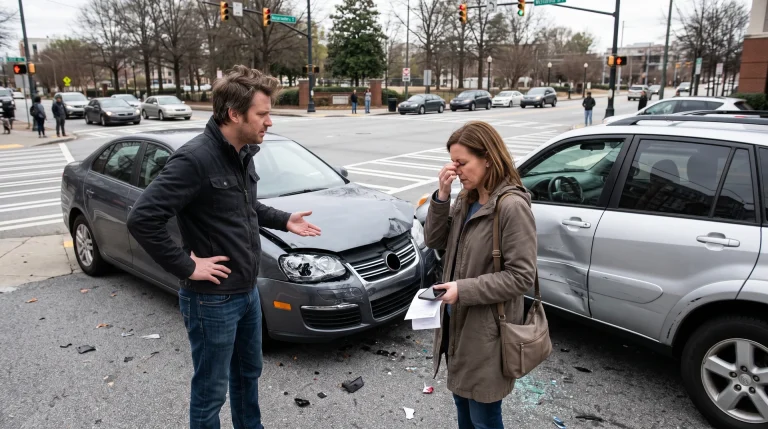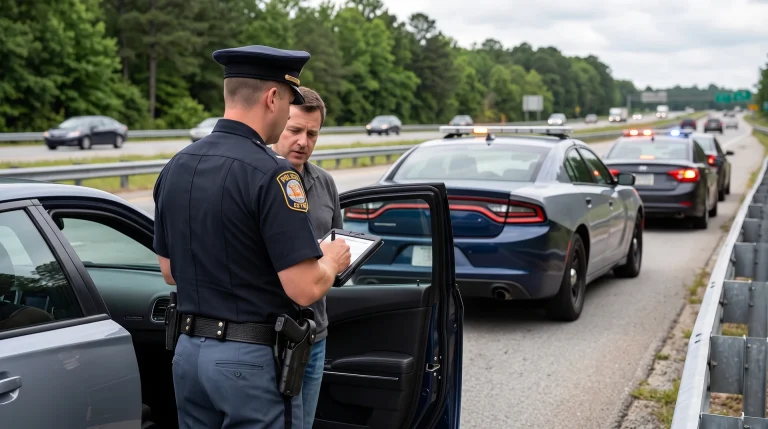
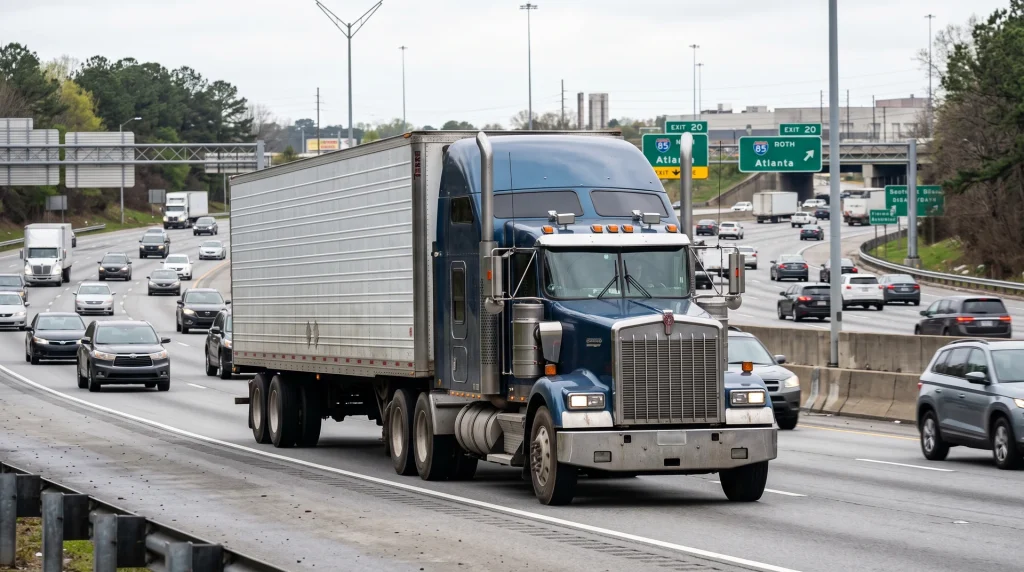
Sharing the busy highways of Atlanta and the entire state of Georgia with massive commercial vehicles is a daily reality for our drivers. When a collision occurs with an 18-wheeler, the results are often catastrophic. However, from a legal standpoint, truck accident claims are not simply "bigger car accidents." They are highly complex legal battles governed by specific state and federal statutes.
At Castan, Lecca & Boeschen, we have helped countless victims navigate this difficult process. To evaluate your specific case, we offer a free consultation for your Georgia accident case. It is fundamental to clarify that this no-cost evaluation policy applies exclusively to car accidents, truck accidents, and worker's compensation cases. All of our immigration consultations are strictly paid, without exception, and carry a $150 fee.
Below, we will explain exactly why commercial accidents are entirely different and why you need to act quickly.
Compliance with Federal Regulations (FMCSA)
Unlike everyday passenger vehicle drivers, commercial truck drivers and trucking companies operate under stringent federal regulations set by the Federal Motor Carrier Safety Administration (FMCSA). In a legal claim, proving that the driver or the company violated these rules is crucial to establishing negligence.
One of the most critical regulations is the "Hours of Service" (HOS) rule, detailed under statute 49 CFR Part 395. These limits are scientifically designed to prevent fatigued drivers from operating heavy machinery.
- 11-Hour driving limit: A property-carrying commercial driver may only drive a maximum of 11 hours after having been off duty for 10 consecutive hours.
- 14-Hour window: All driving must happen within a strict 14-hour window that begins the moment the driver comes on duty.
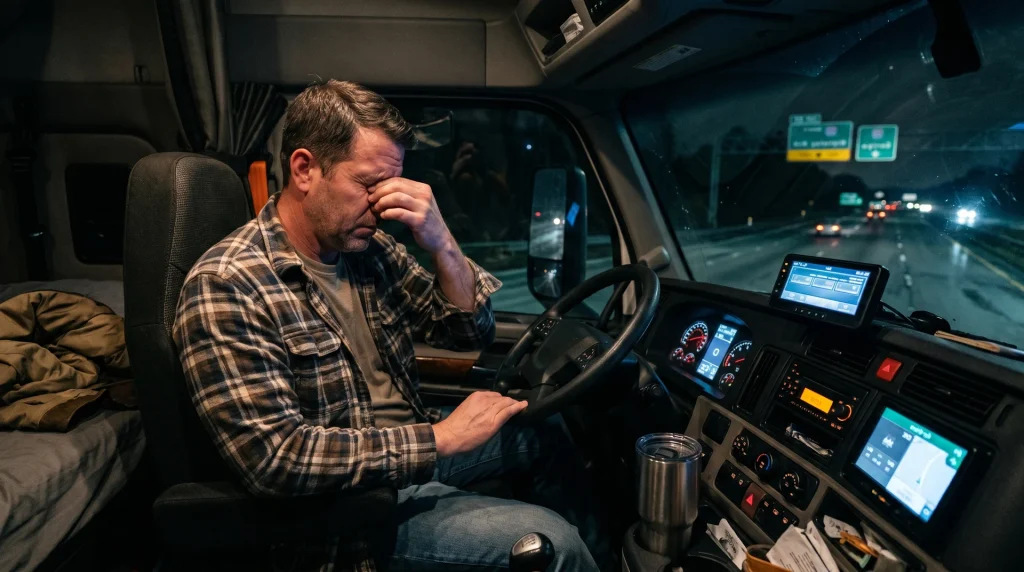
When a truck driver in Atlanta exceeds these limits to meet unrealistic delivery deadlines, the resulting fatigue exponentially increases the risk of fatal crashes. Our legal team aggressively investigates Electronic Logging Devices (ELDs) to uncover if driving times were unlawfully altered.
Multiple liable parties: Beyond the driver
In a standard car accident, the dispute is typically limited to you and the other driver. In Georgia truck accidents, the web of liability is much wider, and the insurance policies are substantially larger. Potentially liable parties can include:
- The truck driver: If they caused the crash through distraction, fatigue, or by violating the law (such as speeding or reckless driving).
- The trucking company (Motor carrier): Under the legal doctrine of respondeat superior, the company can be held vicariously liable for the negligent acts of its employees. Furthermore, they can be directly liable for negligent hiring, poor training, or failing to properly screen drivers.
- Cargo loaders and maintenance providers: If a crash on I-285 occurs because cargo was improperly secured causing a rollover, the third-party company that loaded the trailer could be sued. Similarly, outsourced companies tasked with maintaining brakes and tires can be found at fault.
Additionally, Georgia law has specific rules for these cases. Historically, under Georgia's Direct-Action Statute (O.C.G.A. § 40-1-112), plaintiffs could name a trucking company's insurance provider directly in the lawsuit. However, recent legislative changes (Senate Bill 426) affecting causes of action accruing after July 1, 2024, strictly limit this practice; you can now only directly name the insurer in limited circumstances, such as when the motor carrier is bankrupt or insolvent. Regardless, you can and must hold the trucking company and its driver accountable for your damages.
Why rapid evidence preservation matters
In a claim against a commercial carrier, physical evidence disappears rapidly. Large trucking corporations deploy "rapid response teams" to accident scenes in Atlanta almost immediately to protect the company's financial interests.
To level the playing field, you need an attorney who will immediately send a "spoliation letter" to preserve evidence. If you wait too long, critical proof could be legally destroyed in the normal course of business operations, such as:
- Black box (ECM) data: This records the truck’s speed, hard braking events, and steering behavior in the final seconds before impact.
- Electronic logs and phone records: This data proves if the driver violated FMCSA statutes (49 CFR Part 395) or was texting at the wheel.
- Maintenance history: Reveals if the truck had failed recent safety inspections.
In Georgia, the statute of limitations for personal injury lawsuits is two years from the crash date (O.C.G.A. § 9-3-33). However, waiting months to collect this time-sensitive evidence is a catastrophic error that will devalue your claim.
Frequently asked questions (FAQ)
Who can be held liable in a Georgia truck accident?
In Georgia, multiple parties can share liability, including the truck driver, the motor carrier (trucking company) that employs them, the mechanics responsible for vehicle maintenance, and third-party companies that improperly loaded the cargo. Investigating all involved parties is vital to maximizing your financial recovery.
Why do truck accident cases take longer to resolve?
Commercial claims take longer because they involve exhaustive investigations into federal FMCSA regulations, forensic analysis of black box data, much more severe medical injuries that require months of treatment before future costs are known, and negotiations against massive corporations that aggressively fight to protect their multi-million dollar insurance policies.
Does Castan, Lecca & Boeschen offer free immigration consultations?
No. All immigration consultations at Castan, Lecca & Boeschen are paid and carry a strict $150 fee, without exception. Our free legal evaluations are offered exclusively and solely for car accidents, truck accidents, and personal injury claims.
Request your free accident consultation today
Commercial trucking companies possess massive resources designed to minimize your claim, but you do not have to fight them alone. If you or a loved one has been severely injured in a truck accident in Georgia, protect your right to full compensation.
Contact us immediately to begin our investigation. Call today for your free accident consultation at 678-825-3611 or visit our contact page. (Please remember, if your legal needs involve immigration matters, you can schedule your paid $150 consultation by using the same phone number).