Living in the United States without permanent legal status is a journey of resilience, but it is also a journey filled with legal uncertainty. As we navigate the complexities of 2026, the stakes for our immigrant community have never been higher. Whether you are seeking a cancellation of removal in immigration court or pursuing a specific permit that requires proof of long term presence, the burden of proof rests entirely on your shoulders. At Castan, Lecca & Boeschen, we have spent over 30 years defending the rights of those who have built their lives here, and we know that a single missing receipt or an unexplained gap in your timeline can be the difference between staying with your family and being forced to leave the only home you know.
The legal standard for proving ten years of continuous physical presence is strict. It is not enough to simply tell a judge that you have been here since 2016. You must document your life month by month, year by year. In the current 2026 legal climate, USCIS and the Department of Justice have increased their scrutiny of evidence. They are looking for inconsistencies and “paper trails” that don’t align. This guide is designed to help you organize your history so that when you stand before an officer or a judge, your story is backed by an unbreakable wall of evidence.
To qualify for many forms of relief, such as Non-LPR Cancellation of Removal, you must demonstrate that you have been physically present in the U.S. for at least ten years prior to the service of a Notice to Appear. This is governed by the “stop-time rule,” which effectively freezes your clock the moment the government initiates removal proceedings. If you have lived here for nine years and 364 days when you receive that notice, you may be ineligible for relief. This is why immediate legal intervention is critical.
Furthermore, “continuous” means you cannot have left the country for more than 90 days in a single trip or more than 180 days in total over that ten year period. In 2026, with advanced digital border tracking, the government has more tools than ever to verify your entries and exits. If you traveled back to your home country for a family emergency and stayed longer than expected, we need to address that gap strategically with secondary evidence or legal waivers where applicable.
The strongest evidence of your life in America is your economic footprint. The government expects to see that you have contributed to the economy and maintained a stable residence. Tax returns are the gold standard. We recommend providing IRS tax transcripts rather than just your personal copies of Form 1040. Transcripts prove that the IRS actually received and processed your filing. If you have years where you did not file taxes, it is not too late to rectify that, but you must do so under the guidance of an attorney to avoid self incrimination regarding unauthorized employment.
Employment records are equally vital. In our 30 years of practice, we have found that pay stubs, W-2 forms, and even 1099 records provide a chronological map of your presence. For those who worked in more informal settings, such as domestic work or landscaping, we assist our clients in obtaining notarized letters from employers. These letters must be specific, including the dates of employment, your duties, and the employer’s contact information. In 2026, a generic letter saying “he worked for me for a long time” will likely be rejected for lack of foundation.

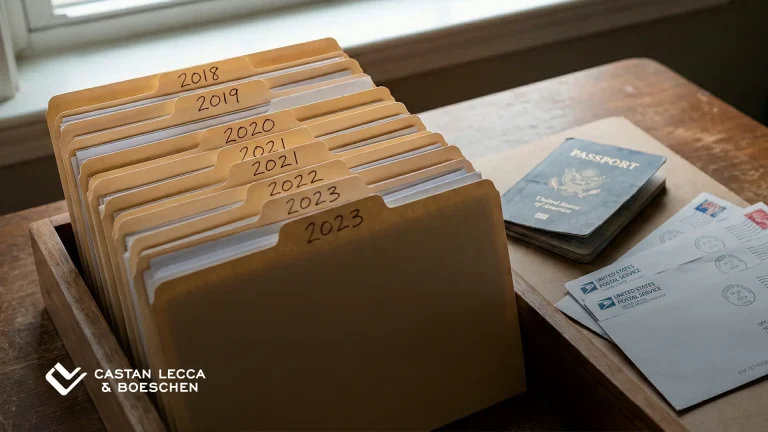
Your address history is a primary metric used by immigration officials. We advise all our clients to keep a dedicated “residency folder” containing every lease agreement they have signed over the last decade. If you lived with family members or friends and were not on the formal lease, we can use secondary evidence. This includes utility bills in your name, such as water, electricity, gas, or even internet service.
Even if you moved frequently, each address needs a corresponding piece of evidence. Bank statements are excellent for this purpose. A bank statement shows the date, your name, and your U.S. address. It also shows transactions made at local businesses, which further proves you were physically present in your community during those months. In an era where digital banking is the norm, downloading and printing these statements from 2016 through 2026 is one of the first tasks we assign to our clients.
For families with children, school records are among the most persuasive documents available. If your children have attended school in the U.S. for the last ten years, their transcripts and enrollment letters serve as powerful circumstantial evidence of your own presence. It is highly unlikely that a parent would live in another country while their minor children are enrolled in a U.S. elementary school.
Medical records are another pillar of a strong case. This includes your own records and those of your family. Hospitalization records, immunization cards for children, and dental visit summaries provide clear, dated proof of presence. In 2026, medical privacy laws are strict, but as your legal representatives, we help you navigate the process of obtaining these records through proper HIPAA authorizations.
If your residency goal is naturalization, you must be aware of the significant changes implemented recently. As of 2026, the Naturalization Civics Test has become more rigorous. Most applicants are now required to answer up to 20 questions instead of 10, needing 12 correct answers to pass. The item bank has expanded to 128 questions, covering more complex topics on federalism and the Constitution.
Processing times remain a challenge. As of February 2026, the median processing time for an I-485 Adjustment of Status is approximately 9 to 11 months, depending on the field office. However, we have seen cases take significantly longer due to backlogs. This is why we emphasize “front loading” your application. By submitting a perfect, document-heavy package at the start, you reduce the likelihood of a Request for Evidence (RFE), which can add six months or more to your wait time.
Many of our clients come to us after a workplace injury or a car accident. This is where the unique expertise of Castan, Lecca & Boeschen becomes your greatest advantage. If you were injured on the job in Georgia, you have the same right to workers’ compensation as any other worker, regardless of your immigration status. However, an injury case can impact your immigration case.
For example, if you receive a workers’ compensation settlement, those funds can be used to prove you will not become a “public charge” in the future. Conversely, if an injury prevents you from working, we must document your medical treatment as proof that you are still present and contributing to your community in other ways. We often coordinate between our personal injury and immigration teams to ensure that a medical malpractice claim or a car accident lawsuit supports your long term goal of staying in the United States.

In Georgia, legal deadlines are unforgiving. If you are injured in a car accident, you generally have only two years from the date of the wreck to file a lawsuit. If you are injured at work, you must notify your employer within 30 days. Missing these deadlines can cost you the financial recovery you need to support your family.
The same urgency applies to immigration. Laws and fees change rapidly. For instance, premium processing fees increased again on March 1, 2026, to reflect inflation. Waiting to file your residency application might not only mean higher costs but also the risk of new, more restrictive policies being enacted.
When you work with us, you are not just hiring a lawyer; you are joining a family that has served the Atlanta area for nearly thirty years. We offer free consultations at our Atlanta and Norcross locations and provide full services in Spanish to ensure you understand every step of the process. Do not let your ten years of hard work be erased by a lack of documentation. Call Castan, Lecca & Boeschen at 678-825-3611 today. We are here to help you move forward.
Part A: Internal Sources
Part B: Recent External Research
Department of State: Visa Bulletin and Backlogs: https://travel.state.gov/content/travel/en/legal/visa-law0/visa-bulletin.html
Preston Moore
Attorney
Preston Moore is a trial attorney whose injured clients have seen more than $30 million in settlements and jury verdicts. An alumni of Georgetown University (B.A.) and Harvard Law School (J.D.), Preston started practicing law at a multinational firm in Atlanta where he represented large corporations in high-value lawsuits. From there, Preston joined a well-respected product liability practice in Atlanta where he focused on representing two key sorts of cases: workplace product injury matters and high-limit insurance litigation. Now, Preston serves his clients by providing high-quality, no-nonsense representation for those catastrophically injured by the negligence of others, whether by settlement (where his clients have obtained over $10 million in recoveries since January 2024) or trial (where his clients have earned over $10 million in jury verdicts since 2022). Preston is loved by Jesus and attends Calvary Baptist Church in Smyrna. He lives in Kennesaw, GA with his wife, Brooks (9), Tripp (3), Emma Kate (newborn), and his Pomeranian, Birdie.
Dustin Thompson
Attorney
Dustin Thompson was raised in rural Camilla, Georgia. Dustin graduated from Georgia Southern University majoring in political science and history. After graduation, Dustin obtained a law degree from Georgia State University College of Law in Atlanta. Before becoming a lawyer, Dustin worked a variety of jobs from a watermelon farm in Mitchell County to a policy think tank in Washington D.C. Dustin has practiced law almost exclusively in the workers’ compensation arena since 2014. For nearly a decade, he worked for a large defense firm in Georgia representing employers and insurers and gaining the invaluable experience and knowledge of how insurers defend claims. In 2023, Dustin joined the firm to use his expertise and litigation skills to help individuals who have been injured as a result of work accidents and third-party negligence. Dustin has been repeatedly recognized by Best Lawyers: “Ones to Watch” in the practice of workers’ compensation. Outside of work, Dustin enjoys traveling, hunting, and attending sporting events. He and his family are active in Buckhead Church.

MICHAEL BOESCHEN
Attorney
Michael Boeschen (Mike) was born in Wichita, KS and raised in Chattanooga, TN. Mike graduated from The McCallie School and went on to study history, Spanish, and Latin American Studies at Southern Methodist University in Dallas, TX. After graduation, he went on to pursue a law degree from the University Of Georgia School Of Law. During law school, Mike participated in the Legal Aid Clinic, assisting in the defense of indigent criminal defendants. Mike has been licensed to practice law in Georgia since 2002 and his main practice area consists of representing injured workers as they navigate through the Georgia workers’ compensation system. Mike is also fluent in Spanish. In his spare time Mike enjoys following soccer, cooking, and spending time with his wife and two young daughters. Mike and his family are parishioners of the Holy Spirit Catholic Church in Sandy Springs, GA

CHRISTIAN PECONE
Attorney
ED DENKER
Attorney
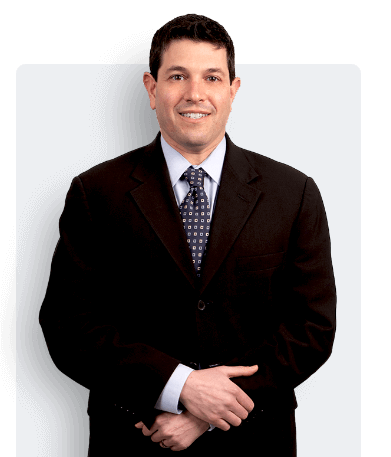
ILIANA DOBREV
Attorney
Iliana Dobrev was born in Bulgaria. After high school, she immigrated to the United States to study law. She graduated magna cum laude from Georgia State University with a Bachelor’s in political science concentrating on pre-law and minoring in Spanish. In 2015, she graduated from Georgia State University College of Law. While in law school, Iliana completed a Graduate Research Assistantship in Labor and Employment Law and Employment Discrimination and two externships in Immigration Law. As an immigrant herself, Iliana is passionate about advocating for and defending immigrants. She is delighted to help families stay together and pursue the American dream. Iliana is a member of the American Immigration Lawyers Association and worked in both a fellowship and a firm specializing in immigration law. Iliana is fluent in Bulgarian and Spanish

KEN THAXTON
Attorney

ALEXANDER LECCA
Attorney
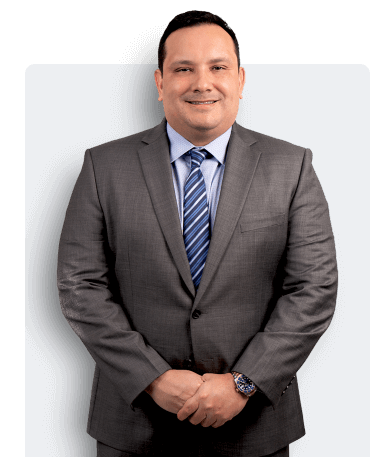
DANIEL CASTAN
Attorney
Dan Castan is a senior partner at Castan and Lecca, PC in Buckhead and represents injured workers before the State Board of Workers’ Compensation and plaintiffs in State and Superior Courts of Georgia for injuries suffered in accidents. Dan litigated one of the seminal claims securing the rights of undocumented workers to receive Workers’ Compensation benefits in the state of Georgia when injured in the case of Wet Walls, Inc. vs. Ledesma. Dan has successfully fought and settled multi million dollar cases. He was born and raised in Newark, New Jersey to immigrant parents from Cuba. He received a Bachelor of Arts degree from Boston College and received his Juris Doctor from The Washington College of Law at The American University in Washington D.C. Dan was admitted to the Georgia Bar in November, 1993. He is an active member of the Hispanic Chamber of Commerce, Georgia Trial Lawyers Association, Atlanta Bar Association and the Workers’ Compensation Section of the State Bar of Georgia. Dan is a founding member and Director of the Latino Victory Fund Georgia and serves on the Board of The Latin American Association. Dan has been dedicated to getting Latinos elected to local, state and Federal offices in Georgia. He has been a Big Brother through Big Brothers and Sisters of Metro Atlanta and a mentor through The Latin American Association’s mentor/mentee program. Dan is married with two children.